











Choosing the perfect kitchen knife for you!
A small notion about the kitchen knife
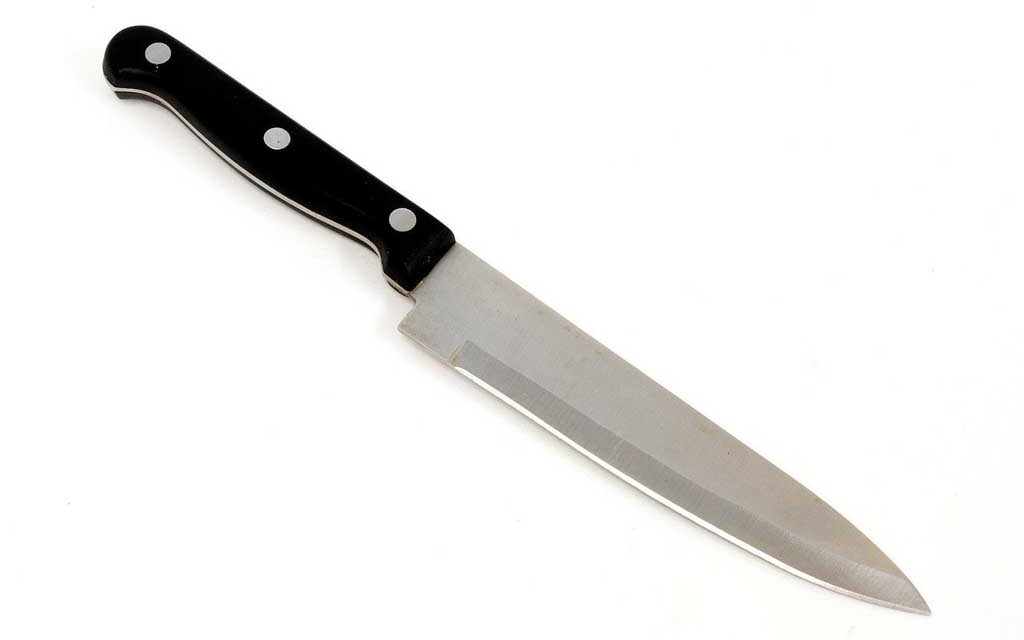
Different from the machete in size, the knife is a sharp kitchen utensil. It consists of a blade and a handle that allows for its manipulation.
A kitchen knife is not something you use only once every few months. In fact, it is probably something you use every day if you choose a good brand of knife.
You can get it in black, pink, and even white, which is great because you can match it with your plates, tablecloths, and everything else in your kitchen.
How to use a kitchen knife?
If you are starting to cook for yourself or others, it is important to learn how to handle kitchen knives properly and select the best tool for the job.
Knife skills add to your overall experience and comfort when preparing food. Learn how to choose the right kitchen knife for the job and handle it correctly.
- Choosing the right knife
- Invest in an all-purpose kitchen knife
If you only have room for one knife in your kitchen, make it an all-purpose knife. Good for chopping, slicing, and performing various other tasks, a good-quality utility kitchen knife is the most versatile tool you can have in the kitchen.
Even if the rest of your tools are cheap and dull, a good kitchen knife will keep you cooking. There is no “best knife” or perfect kitchen knife. If you are looking for a good set of knives, consider investing in a single high-quality knife and other cheaper, supplementary knives.
You can perform the most important cutting tasks in the kitchen with a basic kitchen knife, approximately 12.7 cm long, triangular, and made of stainless steel or another material.
- Use a chef’s knife for chopping, mincing, and dicing
Chef’s knives are also sometimes simply called “kitchen knives” and are sturdy blades. For some cooks, a good chef’s knife is the only slicing tool needed in the kitchen.
Useful for making precise slices in fruits, crushing garlic bulbs, and chopping onions, though not very useful for stirring! Kitchen knives can be made from ceramic, steel, or polycarbonate blends in a variety of styles.
Western-style kitchen knives tend to be wider and more suited for chopping, whereas Japanese-style kitchen knives have a sleeker steel design and are generally more durable.
- Use a paring knife for peeling fruits and vegetables
Paring knives are another extremely common kitchen utensil, generally quite small and used for peeling and slicing. However, they are usually not used for chopping or other significant knife skills in the kitchen. Paring knives are particularly suitable for fresh fruits, useful for cutting an apple, a pear, or stone fruits.
- Use a bread knife for slicing
Serrated knives are particularly useful for slicing bread. There is nothing more frustrating than baking a large, soft brown loaf and breaking it apart with a kitchen knife when trying to cut it into slices.
A serrated knife is also excellent for carving roasted meat joints and other items, making it a useful addition to the kitchen.
- Select knives with good weight and balance
For a good utility kitchen knife, you want proper balance and weight between the blade and the tang—the steel that extends into the knife handle. The best knives should be made from a single piece of steel and be well-balanced.
Check by trying to balance the knife on your finger, just above the handle. It should feel dense in your hand so that you can let the knife do the work for you.
- Using kitchen knives
- Learn how to hold the knife properly
Hold a kitchen knife as if you were shaking hands with the handle. When you grip a kitchen knife, your index finger should rest on the flat side of the blade, while your other three fingers grip the handle firmly, just at the base of the blade.
It should be parallel to your body. This is called the “pinch grip,” and it is the correct way to hold a kitchen knife, offering optimal control and precision in your cuts. Since your fingers are closer to the blade, you can better control and keep it where you want it to go.
When holding the knife, keep the tip and blade pointed downward at all times to stay on the safe side. Kitchen knives should be extremely sharp and used with caution.
Many inexperienced cooks, when picking up a knife, will use a “hammer grip,” where all four fingers wrap around the handle, and the blade sticks out straight, perpendicular to the body.
- Learn how to chop properly
The first step in learning how to use a kitchen knife correctly is mastering the chopping motion. While there are different styles of chopping food, beginners can easily follow a few basic rules.
Learning to keep your guiding fingers tucked away and making safe cuts is absolutely essential for kitchen safety.
In the pivot-point chopping method, the tip of your knife never really leaves the cutting board. You use the tip as a pivot point to lift the dull end of the blade up and down, firmly pressing the knife down into the food you are chopping.
In the wrist-pivot method, the back side of the blade, near where you grip it, never moves away from the board. Instead, it moves up and down from the back pivot point to cut through the food. This is commonly used for slicing onions or other vegetables.
Never strike your knife against the cutting board to cut through a vegetable. It is dangerous and will dull the blade.
- Learn how to guide the food properly
Hold the knife in your dominant hand and turn your other hand into a claw, with your fingers curled inward. Practice with a carrot or an onion and place your claw on the food you are chopping.
Place the flat side of the blade against your claw knuckles. With your knuckles tucked under and out of the way. Guide the food under the knife with your claw hand and rotate the blade with your cutting hand.
Many chefs like to show that they can do this very quickly. It looks dangerous and fancy. While this is the “correct” chopping method, having your guiding fingers so close to the knife makes many cooks nervous.
It’s safer than having open and exposed fingers, but it takes some practice to get used to. Do what works for you and go slowly until you become more experienced.
- Learn to master and follow through
Trying to cut oblong or rounded produce can be dangerous. That’s why it’s common to create a flat working surface from which to chop, dice, or make any cuts needed on your vegetables and fruits.
“Trimming and tailing” refers to the practice of cutting off the bottom and top ends, which are sometimes somewhat dried out or thin, from the produce to create a flat surface to work from.
Potatoes, tomatoes, onions, and other rounded fruits and vegetables should all be trimmed and tailed before beginning. Hold the vegetable firmly on its side.
Cut off the ends, then discard them. It is then common to cut a tomato, for example, in half from flat side to flat side. Then chop or slice each half individually.
- Use dicing for smaller, uniform pieces
Chopped vegetables are cut into bite-sized pieces, while diced vegetables are much smaller, usually a few square centimeters. A good dice is generally quite uniform.
This can be achieved by scoring the vegetables and fruits before cutting them at a perpendicular angle. Score the vegetables in two directions at regular intervals. Then dice them by running your knife through the food at a perpendicular angle to your score.
- Finely chop vegetables to dissolve them
Chopping means cutting vegetables and other produce so small that they should dissolve into the pan when cooked. Garlic is typically minced. To mince something,
You start by dicing it, then pass your knife over the pile several times to reduce it as much as possible. The final result should be somewhere coarser than a paste and much smaller than a dice.
- Chiffonade herbs and other greens
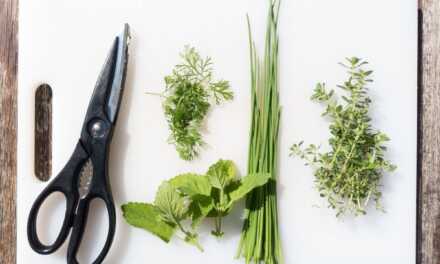
A chiffonade creates small uniform curls of fresh greens and herbs, and it is commonly used to slice garnishes as a finishing touch for salads, soups, and roasted meat or pasta dishes.
Spinach and basil are probably the most common vegetables for chiffonade. To chiffonade, you roll up each leaf of the vegetable you’re cutting into a tight roll.
Then chop at regular intervals. The result should be nice, uniform green strips that you can use to garnish your dish.
- Julienne vegetables for garnish
Julienne is one of the more advanced cuts you can learn, and for some, it’s a cool way to add flair to a dish or create a garnish. Carrots, beets, cucumbers, and other root vegetables are commonly julienned.
Vegetables should be firm enough to cut. You probably wouldn’t be able to julienne a tomato. Cut the food into planks of equal length.
Then stack the planks on top of each other and cut them into thin strips. Each slice should be about the length of the space between the rivets on your knife.
Different types of kitchen knives and their uses
This guide is intended for the home cook who is curious to learn more about the most common types of kitchen knives and their uses. Upgrade your tools, and it can feel like anything is possible in the kitchen.
Maybe you’ve just bought a knife set and realized you don’t really know what they’re for. Maybe you’ve had a knife set for a while
And you’re starting to wonder how the ones you never use could make your life easier. Either way, understanding the different types of kitchen knives and how to use them can open up a whole new world. Grab a knife and a board, and let’s chop!
- The Chef’s Knife
The chef’s knife is one of the most versatile tools. Any professional chef will tell you it’s a must-have. It should feel like an extension of your arm. It’s essential for chopping and dicing vegetables, fruits, and herbs.
As well as cutting a variety of other ingredients like meat, poultry, and fish. They usually measure between 23 and 30 cm long, and the blade is rounded at the end. Don’t use it to peel small produce (it’s too big for precision), and avoid using it to carve cooked meat.
- The Santoku or Japanese Knife
With a straighter blade, it has small indentations that make food slide off more easily. Like a chef’s knife, it is also very versatile—great for chopping, dicing, mincing ingredients, or slicing cheese. You can use it for just about anything you’d use a chef’s knife for. Both are excellent all-purpose knives.
- The Carving Knife
Now, we’re getting a bit more specialized. After cooking a large cut of meat like roasted beef or turkey, a carving knife comes in handy.
They are narrower for precision and can be longer to slice larger pieces. They may have indentations on the side of the blade to help each slice release more easily.
- The Bread Knife
Bread knives are long and have serrated edges. They easily cut through soft or crusty bread without compromising its integrity. When using one, move it more like a saw than a chef’s knife. Besides slicing bread,
They can be used with other baked goods, like cake. Other than bread, you can use them to cut large melons where straight blades often get stuck, slice tomatoes, and break chocolate bars into smaller pieces.
- The Utility Knife
Utility knives are smaller than chef’s knives but not as small as paring knives. They are great for slicing and chopping small to medium-sized vegetables and cuts of meat.
A serrated utility knife is also handy for slicing sandwiches. A straight-edged utility knife is useful for peeling produce, though sometimes it’s best to rely on paring knives.
- The Boning Knife
A boning knife has an extremely narrow and flexible blade that tapers to a sharp point. It is used to debone cuts of meat more efficiently and reduce waste in the process. It can cut through connective tissues and tough joints that other knives struggle with. Remember, cut around bones, not through them. You can also use it to remove the skin from fish, as it helps separate the flesh easily.
- Paring Knife
Paring knives are proof that you should never judge a knife by its size. This small piece of cutlery has a very thin blade that is super sharp. It peels, chops, slices, minces, and expertly removes seeds.
It’s my go-to for slicing fruits or cutting hot peppers. While you wouldn’t want to cut large meats or big produce with it, you can use it for just about everything else, and you’ll find yourself reaching for it a lot. It comes with either a straight or serrated edge.
- The Tomato Knife
The blade is usually about 18 to 21 cm in length and is designed to be lightweight and easy to handle. Tomato knives have a rounded blade with a sharp, serrated edge. They are designed to cut and slice tomatoes.
This requires a specialized cutting tool due to their delicate skin and soft, fleshy center. The serrated edge of the knife cleanly cuts through the skin without crushing the soft inside, allowing the chef to create neat and uniform slices or segments.
When cutting tomatoes, many tomato knives are specially designed with textured plastic or rubber handles to help provide a better grip during cutting tasks.
- The Dinner Knife
The most basic type of table knife. A dinner knife is the standard type of knife you will use every day for breakfast, lunch, and dinner. They are typically made of metal or stainless steel and often feature a very slightly serrated edge to help with tougher foods.
- The Steak Knife
A steak knife is a table knife that has a serrated edge and a sharp tip. This allows the diner to easily cut through tough cooked meats at the table, such as steak. Nowadays, they are also often served with burgers
and other large meat-based dishes. Sharp, lightweight, and versatile, steak knives are a must-have for any establishment that serves a lot of meat dishes.
- The Fish Knife
A fish knife has a wide, flat blade with a sharp, curved edge. This shape makes it easier to remove the skin from cooked fillets, while a pointed tip is often included to help remove small bones.
- The Butter Knife
A butter knife has a smooth, blunt edge and a wide, paddle-shaped form, allowing the diner to spread butter without scraping crumbs or accidentally slicing bread.
Butter knives are perfect for spreading butter on scones, English muffins, or sandwich bread, making them a must-have for any afternoon tea enthusiast.
A Guide to Different Types of Knife Edges
Without a doubt, the most important part of any knife. The edge is what makes a blade sharp. Different types of edges are needed to cut through different foods, so we’ll go through the various types and explain which task each is best suited for.
- The Straight Edge
The most common type of edge, a straight edge is also sometimes called a flat-ground edge. It is typically found on chef’s knives, paring knives, and utility knives.
- The Serrated Edge
A serrated edge has grooves and sharp ridges along the blade, which help cut through tougher foods. They are also useful for slicing softer foods without crushing them. Bread knives, tomato knives, and steak knives typically have serrated edges.
- The Scalloped Edge
A scalloped edge has hollow dimples along the side of the blade, which help prevent food from sticking to the knife’s surface. They are particularly useful for cutting wet or sticky items,
such as vegetables and raw fish. Japanese Santoku blades and salmon knives often have this type of edge.
- The Hollow-Ground Edge
Commonly seen on Japanese knives, a hollow-ground edge tapers from the middle of the blade to create a very thin, sharp edge. This makes them extremely sharp but also more vulnerable to wear and breakage, and they may need to be sharpened more frequently.
What Makes a Good Kitchen Knife?
If you’re in the market for a new knife—whether it’s a chef’s knife, a paring knife, a bread knife, or something else—it’s important to consider what exactly makes a good knife. Yes, sharpness matters, but ultimately, it depends on the material, design, and maintenance.
- What Is the Best Knife Material?
Most kitchen knives are made of metal, but you can sometimes find high-quality ceramic knives. Overall, the best kitchen knives tend to be made from one of the following materials:
- Carbon Steel
Our favorite chefs’ knives are forged from carbon steel, a metal alloy component consisting of the two elements in the name. Carbon makes the steel much stronger and more durable, so unlike other metals,
it won’t bend easily and will hold its edge for much longer. Carbon steel knives are a favorite among professional chefs. But there is one downside—this material is more prone to rust, meaning it requires careful care and maintenance.
- Stainless Steel
This is the most common element you’ll find in knife sets. Stainless steel is a cheaper metal that can still hold up well in the kitchen.
It sharpens easily and can produce powerful chopping action, and unlike carbon steel, stainless steel does not rust easily. However, this metal is softer, which means it can bend and needs to be sharpened more often.
- Damascus Steel
This metal alloy combines the hardness of carbon steel with the flexibility of stainless steel. The core is made of carbon, meaning you get the same durability and strength.
But the exterior is stainless. So you get flexibility and the ability to bend. Honestly, these knives often look really cool as they are made of two metals folded together.
Manufacturers can get creative with patterns. But this influences their cost. Literally, these knives can become very expensive.
- Ceramic
In some areas, ceramic knives outperform the competition. They are incredibly sharp, lightweight, and inexpensive. They do not rust and require little sharpening.
However, ceramic is not as durable as other materials. These knives can easily chip or break and are difficult to sharpen. For small knives, ceramic can be a good investment. But for your chef’s knife, stick to metal.
What are the characteristics of a good kitchen knife?
Material is not the only thing you should pay attention to when looking for a good kitchen knife. Several other factors come into play, from blade size to the balance of the knife itself.
- Judge it by its size
Depending on the type of knife you are looking for, the required size will change.
Chef’s knife: For a chef’s knife, your ideal blade for chopping vegetables and meat should be around 25 cm. This makes it a universal size for cutting just about anything.
Paring knife: These small knives are perfect for precise tasks like deveining shrimp and cutting fruit. They should measure around 9.25 to 12 cm long.
Bread knives: You’ll find the best serrated knives in the 24 to 30 cm range—the ideal size for slicing bread.
- Watch the weight
A good knife will certainly not be the lightest object in your kitchen. But it doesn’t need to be the heaviest either. There are different schools of thought on whether the best knives are heavy or light.
But ultimately, they should have the weight that suits you. You don’t want to buy a knife that’s too heavy to chop with. So find one that feels comfortable in your hand.
- Embrace balance
There should be an equal distribution of weight between the handle and the blade of your knife. If you find a knife that is too heavy in the blade, it will be difficult for you to use.
A handle that is too heavy will result in uneven and less efficient cuts. Hold the knife in your hand before buying to ensure its weight distribution is right.
- Prioritize comfort
Some high-quality knives are entirely made of steel, from blade to handle. And while they look sleek, that doesn’t mean they are the most comfortable in hand.
You’ll be using your kitchen knives almost daily. So make sure you like the feel of the grip. Don’t buy one that makes you uncomfortable!
How to keep your knives in good condition?
Once you’ve found and purchased a new knife, it’s up to you to ensure your tool stays as fresh as the day you bought it. Follow these easy knife care tips for the best results.
- Sharpen the knife often
The first thing to do is invest in a high-quality knife sharpener. Because you should frequently condition your blade. How often should you sharpen your knife? That depends on the material.
For ceramic knives, you almost never need to sharpen them. Damascus steel depends on the manufacturer, so check the instructions that come with your knife. Stainless steel and carbon steel will require more frequent sharpening.
- Store with intention
Please do not store your knives loosely in a drawer. You can use a magnetic strip to store your kitchen knives.
But you can also use a knife block. Regardless of the type of storage you choose, make sure your knives cannot hit anything else in the kitchen.
Like spatulas, spoons, or other fun kitchen gadgets. These will grind against the blade and leave you with a dull knife.
- Hand wash every time
Your knives may say they are dishwasher safe. But you’ll have better results by washing kitchen knives by hand. Handles made from non-metallic materials can degrade over time in the dishwasher.
And the blades themselves may be more prone to rust when subjected to an intensive cycle. Experts recommend washing your knives by hand and drying them immediately after use.
- Get a high-quality cutting board
Even if you take the best care of your knife and sharpen it daily, you can quickly damage the blade if you cut on a poor-quality cutting board.
Wood and marble boards are the best. Plastic should not be your first choice. But glass should be your last choice.
By following these tips, you’ll be able to find the knife of your dreams.