
















Find the ideal refrigerator for your kitchen!
What is a refrigerator?
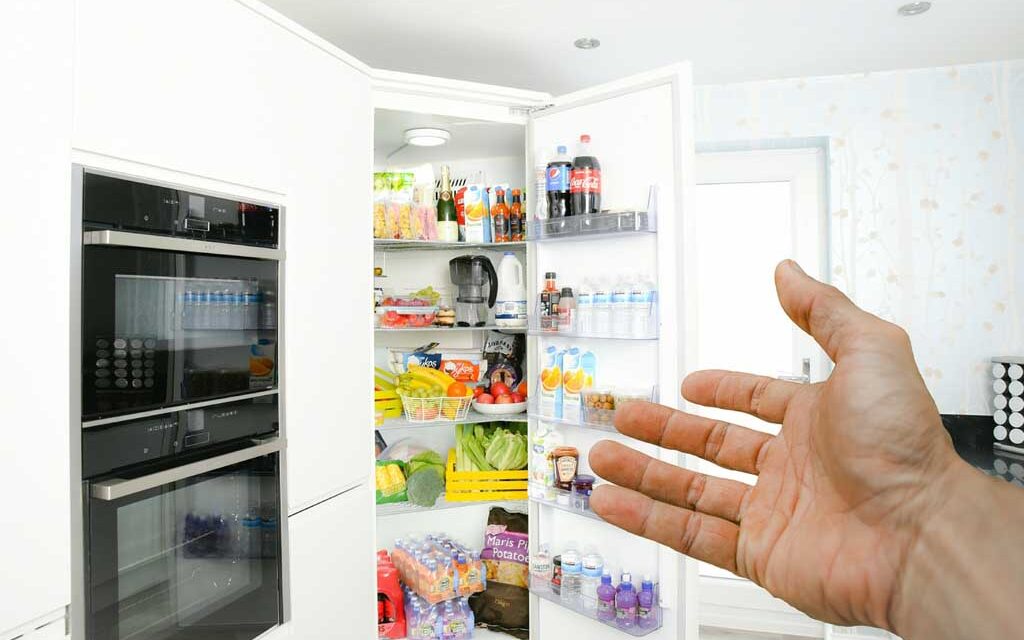
Similar to a piece of furniture or a closed, insulated cabinet, the refrigerator is a common appliance in many homes. It is usually found in the kitchen or pantry next to the sink. It has a temperature regulated by refrigeration, which is independent of the external temperature.
What is the function of a refrigerator?
The refrigerator serves several important functions, including:
- Food storage
- Protecting stored food from spoilage
- Cooling water
As its name suggests, the refrigerator fulfills all three functions. However, there are other uses you may not be aware of. Refrigerators keep food fresh and in good condition until you decide to eat it.
The liquid stored in the refrigerator is in a closed system and is cooled by water that enters the compartment through a door or a tap. If there is an issue with the door or tap, the liquid may not cool sufficiently and could start leaking into the air.
This can cause bad odors and may also create a risk of food spoilage. The refrigerator prevents deterioration by maintaining a constant temperature between the inside and outside of the freezer.
Cold air enters the freezer while warm water flows from the top of the refrigerator. In the spring, you can open the refrigerator door to check the condition of the food and ensure it has not spoiled.
However, most of the time, you won’t need to do this. If you occasionally open the refrigerator door, you should make sure that water is not leaking near the hinge area of the unit.
The benefits of having a refrigerator at home
There are many reasons why having a refrigerator at home is important.
- Food gathering
One of the benefits of having a refrigerator in your home is that it makes it easier to gather all the food you need in one place. You don’t have to go back and forth to the kitchen every time you need something.
You can also get all your groceries in one trip if you store them in properly labeled containers. This makes it easy to find specific items and can significantly reduce the time you spend in the kitchen.
- Energy savings
Another advantage of having a refrigerator at home is that it helps save energy. Energy consumption can become quite high if you use multiple appliances.
You may not even realize that you are using too much electricity because you buy products in large quantities from stores. Having a refrigerator can greatly help reduce the amount of energy you use in the kitchen.
Especially if you can stack multiple freezers on top of each other. You can also store all the extra food you want to have on hand in case of an emergency.
- Keeping track of food
Finally, another benefit of having a refrigerator at home is that it makes it much easier to keep track of all your food. This allows you to know which items you need to have on hand when they are running low or in poor condition.
You will also be able to determine the optimal temperature levels for different types of food to avoid overheating them. This can help you save money since you won’t need to buy as much food and won’t waste food by eating too much of something that isn’t delicious.
How to use your refrigerator more efficiently?
Refrigerators are an essential part of any kitchen, but many of us don’t use them to their full potential. As a result, food is not stored properly and tends to expire well before its intended shelf life. Make the most of your refrigerator by following these different ways to use it more efficiently.
- Keep used food at the front
Keep open food or items that are about to expire at the front of your refrigerator shelves, in front of newer items. This way, you will use them before moving on to sealed foods. There’s nothing like a visual reminder, and this is no exception!
- Temperature
Small temperature changes can have a huge impact on the shelf life of your food. Milk, for example, stays fresh best at 4°C. Keeping your refrigerator below 5°C helps keep your food fresh, flavorful, and in good condition.
- Non-perishable products
Less perishable foods, such as condiments, handle temperature fluctuations better. So, store them in your refrigerator doors.
They endure the most temperature changes every time you open and close the refrigerator door without affecting their taste or texture.
- Space
Overstocking your refrigerator can prevent you from emptying it without wasting food. It also disrupts the circulation of cold air inside.
On the other hand, keeping your refrigerator nearly empty leads to uneven temperature distribution. Maintain a balance by filling your refrigerator just enough.
- Easily consumable foods
Dairy products, cooked meals, cooked meats, and pre-prepared foods should be placed on the bottom shelf, as this area has the lowest temperature.
Packaged foods, beverages, and other less perishable foods can be stored on the middle or top shelves, where the temperature remains stable. You should always ensure that food is stored in airtight containers.
- Raw foods
Raw meat and fish should always be stored at the bottom of your refrigerator, where temperatures are the lowest, to prevent them from contaminating the rest of your food. Since they are highly perishable, keep them sealed and free of leaks.
- Produce
Fruits and vegetables should also be stored in the bottom drawers of your refrigerator. Always keep these drawers separate from other types of food and ensure that produce is properly packed using paper towels or paper bags.
- Using the Refrigerator Door
The doors are the warmest part of the refrigerator, so these shelves should hold items most resistant to temperature fluctuations, such as juices and condiments.
As well as marinated ingredients. Many people have the habit of storing butter, dairy products, and eggs on the door shelves.
But it is actually better to keep these items on the upper shelves of the refrigerator. Properly organizing food in your refrigerator is important to keep them as cold as possible.
What You Should Not Necessarily Put in Your Refrigerator
Some things will do better outside the refrigerator than inside. Tomatoes, for example, will not age well in the fridge and should be stored on the counter or in a pantry. Avocados and certain fruits can be left at room temperature if they need to ripen. Staple foods like onions, potatoes, and squash do better when stored in a cool, dark place.
Like a shelf in the garage or the back of your pantry. Items such as flour, nut butters, and coffee can be stored at room temperature but will last much longer if kept in the refrigerator.
Some Types of Refrigerators to Consider
One of the most important appliances you will find in any kitchen is usually the refrigerator. Gone are the days when these appliances were simply considered boxes.
Taking up space in the kitchen, technology has completely redefined the refrigerator and what it is capable of doing. Nowadays, there are different options in terms of style, color, and design.
These all come with a wide variety of features, all aimed at transforming your kitchen into an attractive hub. With these reinventions, a new and daunting reality sets in—finding the right one for your space.
As well as the type of refrigerator that will meet your needs and fit your budget. Here are five types of refrigerators to consider.
- Top-Freezer Refrigerator (Double-Door or Top)
This is the most popular type of refrigerator. Essentially because, among the others, it is the most economical. This is the refrigerator configuration most of us grew up with.
As its name suggests, it comes with a freezer compartment located at the top, while the fresh food compartment, which takes up about a third, is below. The price ranges from 400 euros to 2000 euros.
- Advantages of the Top-Freezer Refrigerator
- It comes at an affordable price.
- Its featured style is usually rich.
- Its design is simple.
- Disadvantages of the Top-Freezer Refrigerator
- Its configuration is not flexible.
- Accessibility to the back of the freezer is limited, especially for children and shorter adults.
- For an opening from near to fully open, a lot of space is needed.
- Bottom-Freezer Refrigerator
This is simply an inversion of the traditional type of refrigerator mentioned above (top-freezer). That is, instead of having its freezer compartment at the top,
it is now at the bottom (ground level), while the fresh food compartment is at the top. With this type of refrigerator, the freezer compartment can come in the form of a swing door or as a drawer. The price ranges from 850 euros to 2400 euros.
- Advantages of the Bottom-Freezer Refrigerator
- The price is quite economical.
- Access to the fresh food compartment is easy.
- Disadvantages of the Bottom-Freezer Refrigerator
- The configuration is also not very flexible.
- Access to the fresh food compartment (the highest zone) is quite inconvenient, especially for the swing door version.
- To fully open the doors, a lot of space may be required.
- Side-by-Side Refrigerator
This type of refrigerator consists of a fridge on one side and a freezer on the other (parallel to each other). For some refrigerators, the width of the two compartments is equal,
while others prefer to allocate more space to the refrigerator (fresh food compartment). This automatically means that the shelves in these compartments will be narrow.
As such, it may not be able to accommodate large items. This type of refrigerator tends to have more features compared to top and bottom freezers. The price ranges from 750 euros to 3900 euros.
- Advantages of the Side-by-Side Refrigerator
- Access to both the freezer and fresh food compartment is more convenient.
- The freezer capacity is abundant.
- It suits kitchens with less space or a galley-style layout.
- Disadvantages of the Side-by-Side Refrigerator
- May not be able to accommodate large items due to its narrow compartments.
- Less fresh food storage compared to top and bottom freezers.
- The cost of a side-by-side refrigerator is high.
- French Door or Multi-Door Refrigerator
This type of refrigerator combines the features of a bottom freezer and a side-by-side freezer. The fresh food compartment is typically on top with two doors,
while the freezer compartment is below (ground level). The freezer compartment can also come in the form of two drawers. This type of refrigerator has become very popular in recent times and is therefore in high demand. This refrigerator costs between 1,200 euros and 3,500 euros.
- Advantages of the French Door Refrigerator
- Its design is very aesthetic and functional.
- Can hold a variety of items.
- Flexible installations thanks to narrow doors.
- Variable cooling zones, allowing maximum food freshness.
- The configuration is very flexible.
- Disadvantages of the French Door Refrigerator
- Not budget-friendly, which is evident due to its superb design.
- Compact or Mini Refrigerator
This is yet another traditional refrigerator and is mainly found in dorm rooms. They are generally used in spaces where introducing a full-sized refrigerator is impractical.
Besides dorm rooms, they can also be used in hotels, offices, compact apartments, motels, etc. This is a refrigerator that not only cools food but also heats it. This refrigerator costs between 110 euros and 1,500 euros.
- Advantages of the compact refrigerator
- It comes with shelf options inside its compartment.
- It has a frost-free compartment.
- It is ideal for locations without much space.
- Disadvantages of the compact refrigerator
- This type of refrigerator generally has little or no freezer capacity.
- Wine refrigerators
These appliances are like a second cousin to compact refrigerators. They are specifically designed for beverages, and more specifically, for those who drink alcohol. It is not mandatory.
But keeping your white wine between 49 and 55 degrees is much more important. Although they are usually of the compact variety, you can also buy them in full size.
They have space for hundreds of bottles. If you are a wine lover, this one is ideal for you! You can also find models with multi-zone temperature control if you really want to enjoy your wine.
- The camping refrigerator
The greatest advantage of the camping refrigerator is that it is available in a variety of sizes, styles, and designs. This means that no matter where you plan to go camping, you can find one that will perfectly meet your needs.
They can be found in small, medium, and large sizes depending on how much you need to store in your cooling area. There are also several types of models, which offer different storage capacities for different needs.
Refrigerators range from those that only have room for a few soda cans to those with enough space for a large number of canned foods. Additionally, the advantage of the camping refrigerator is that it requires little maintenance once used. Items stored inside will not spoil if placed in a dry area. Moreover, the plastic that makes up their outer shell will not absorb liquids, allowing you to fill them with ice and drinks without fear of damaging the item itself.
This also eliminates the need to use ice blocks or other methods to cool your food, meaning you can enjoy a more comfortable and tasty meal while camping.
- The Tabletop (or under-counter refrigerator)
The convenience of a tabletop refrigerator is very practical for those who do not have enough space in their refrigerator or for people living in smaller homes. When you want to enjoy your favorite foods.
But you need time to prepare them. A tabletop refrigerator is a great option. Because the refrigerator shelves are on the top instead of the bottom, you will not struggle to get enough space to store everything you need.
Tabletop refrigerators are much easier to clean than countertop models. Small in size, these types of refrigerators offer you more space compared to others. They are also much cheaper than the large refrigerators of the past.
Which makes them a great purchase for anyone looking for a new refrigerator. And speaking of costs, even though they may be smaller than the large units of the past.
They are generally very affordable and easy to use. The price is certainly a strong advantage of the tabletop refrigerator. But remember that it will only be useful if you use it.
Things to consider when choosing a refrigerator
When shopping, it is important to take a number of factors into account. Here are a few that might help you:
Size: This is an important consideration to keep in mind. Different types of refrigerators have different capacities for freezers and fresh food compartments. If you like to store a lot of items and large ones, you should not consider the side-by-side type.
Your space: Another point to consider is the size of your home. For a dorm room, you should consider a compact refrigerator rather than a side-by-side type. On the other hand, for a large space, you can opt for a top or bottom freezer.
Convenience for children: It is already obvious that the best refrigerator option is always the compact type. Other options could be the side-by-side or French door model.
Your budget: No one wants to buy a refrigerator only to realize they cannot fill it with items. You need one that will not put too much strain on your budget.
There is no doubt that for every household, there is a certain configuration that suits them best. To make the most of your refrigerator.
It is important to take some time and consider the above factors. Because in the end, what you really want is the right refrigerator for you.
5 Keys to Refrigerator Maintenance
- Check the door seals.
A loose seal allows cold air to escape, wasting energy and making your refrigerator work harder than necessary. First, make sure the seals are free of food residues (clean these seals at least twice a year).
Using a toothbrush and a baking soda and water solution. Then, try the bill test. Close a bill in the door so that half is inside and the other half is outside.
If it slides out easily, it would be important to call a professional for a thorough check.
- Keep the coils clean.
When condenser coils are covered with dust, your appliance cannot function properly. Twice a year, pull the machine away from the wall to reveal the coils at the back (or detach the grill if the coils are at the bottom front). Unplug the refrigerator and vacuum them with the brush attachment.
- Set the right temperature.
Keep your refrigerator at an ideal temperature (between 1 to 4 degrees Celsius).
- Keep it full (even if you never cook and only have takeout).
Refrigerators need “thermal mass” (i.e., a lot of things) to maintain low temperatures. Fresh food and drinks help absorb the warm air that enters.
When you open the door. If you do not cook often or your refrigerator is too large for your needs, store a few jugs of water inside.
- Be prepared.
In case of a power outage, keep the doors closed and use pantry food. When you keep your refrigerator constantly closed.
It will be able to keep your food safe for four hours. The temperature of a full refrigerator will remain constant for 48 hours. But if it is only half full, that temperature will last for 24 hours.
Conclusion
No matter what type of refrigerator you choose, make sure to measure your available space to find a product that will fit your designated area.
We cannot tell you how often customers buy products only to return them when they discover they do not fit in their kitchen or another space.
It is also essential to ensure that your new refrigerator matches the overall aesthetics of your kitchen. The handles, finish, and overall style should be visually compatible with the rest of your appliances.
This concludes our overview of the most common refrigerator types, arrangements, and styles to consider when shopping.