












The best colander: How to choose wisely!
The Colander: For Easy Cooking
Even if your home cooking is limited to preparing instant macaroni and cheese, a colander is essential. Colanders are simply bowls with holes that allow liquids to drain out.
Leaving solid food inside. They are indispensable for separating pasta from the water in which you just boiled them, beans from the juice in which they are canned, and many other cases.
Where you want to get rid of excess liquid. They are also great for rinsing berries, vegetables, beans, and even lettuce.
Are There Different Types of Colanders?
A colander can be made of:
- Plastic
- Ceramic
- Metal (stainless steel)
- Aluminum
The oldest ones were made of tin or granite.
- Plastic Colanders
Plastic colanders can be damaged if placed on a hot surface. Some people also worry that certain plastics may melt if a boiling liquid, such as oil, is poured in. Plastics can also stain.
- Ceramic Colanders
Ceramic colanders often have holes only at the bottom.
- Metal Colanders
Metal colanders will have a rim around the top edge. People who buy stainless steel ones seem to like them because they stay shiny enough to serve as kitchen decoration on the wall or shelf.
The Size and Shape of Colanders
Although there seems to be a standard size—about 23 to 25 cm wide at the top (around 27 to 30 cm)—you can get smaller and much larger ones. The largest ones can be used by professional cooks and home canners.
Some colanders have feet just below that protrude from the bottom of the bowl. Others have legs attached to the side or a single pedestal base. Some have no feet or resting device at all. Those with such a resting device.
Allow you to place the colander in the kitchen sink without worrying about sink hygiene. At the moment the food in the colander touches the sink bottom through the holes. Most colanders generally have a handle on each side at the top.
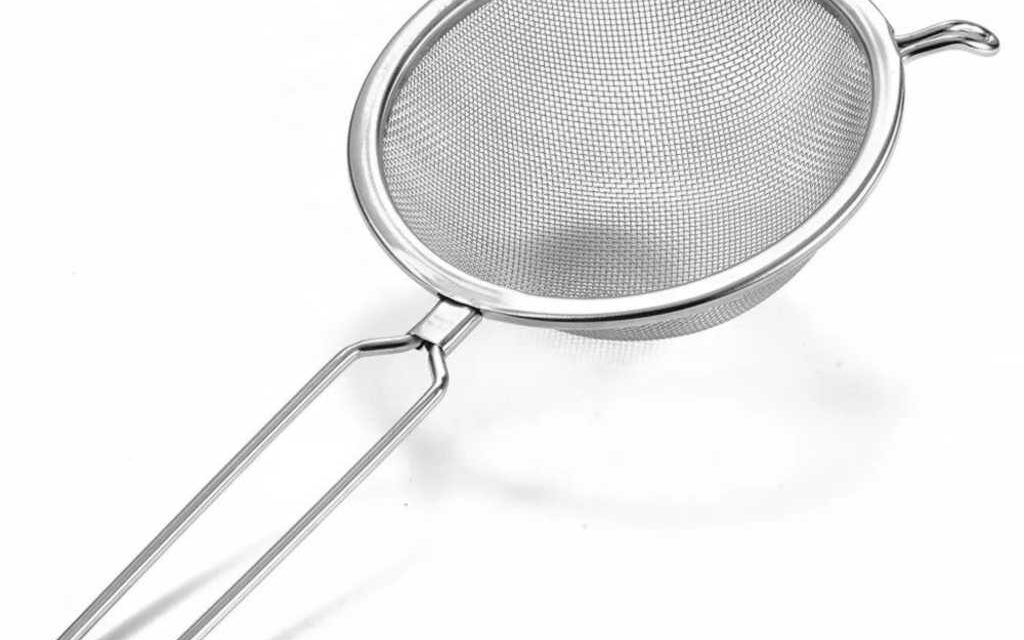
However, some are like very large flour sifters, with a long handle on one side for holding. Some are designed to rest over a sink, resembling more of a mesh basket.
With long arms that extend to reach each side of the sink and keep the colander suspended above it. These usually, but not always, have feet. Not all colanders are dishwasher-safe. Check before buying if this is an important point for you.
How to Use a Colander?
A colander is a bowl-shaped kitchen utensil with small holes that is often used for draining pasta. Besides draining pasta, you can use a colander for all sorts of kitchen tasks, such as washing produce, sifting flour, and grating cheese.
It is very easy to use one, and once you get the hang of it, a colander will always be a kitchen staple. The main drawback of colanders is that they only work for foods larger than the holes.
Which leads some people to opt for fine-mesh colanders, which have smaller holes to separate finer ingredients. With these different modes of use, you will be able to make better use of your colander.
- Draining Pasta
- Cook your pasta until al dente.
Use a large pot of boiling water, then add your pasta and let it cook according to the cooking time indicated on the package.
Stir the pasta so it doesn’t stick. Once done, taste it to make sure it has the right texture. The pasta should be firm but not crunchy when you bite into it.
- Place the colander in your kitchen sink.
Place the base of the colander flat on the bottom of the sink. If your sink is not empty, remove or move anything so that the colander is flat and stable. Make sure your sink does not contain standing water. You don’t want dirty sink water touching your pasta when you drain it into the colander.
- Use a ladle to reserve some pasta water for your sauce.
Pasta water is full of salt and starches left from the cooking process. When you add pasta water to your pasta and sauce, it makes the sauce smoother and helps it stick to the noodles. Instead of pouring all the pasta water down the drain,
Save some for your dish. Keep about 1 cup (240 ml) of pasta water before draining the rest. Set the pasta water aside in a bowl or glass so you can use it when needed.
- Pour the pasta and remaining cooking water into the colander.
Carry the pot of pasta to your kitchen sink, being careful not to splash yourself with hot water. Slowly pour the pasta and pasta water into the colander. The water will drain through the holes in the colander.
Leaving you with perfectly cooked pasta ready to be mixed with sauce. Avoid rinsing the pasta after draining it through your colander. Rinsing removes some of the starches that are necessary to help the sauce cling to the noodles.
- Transfer the drained pasta back to the pot and add your sauce.
Gently pour the pasta out of the colander and back into the pot. Then add your sauce along with the pasta water you set aside. Stir everything together and enjoy!
- Exploring Other Uses for Your Colander
- Steam vegetables with a metal colander if you don’t have a steamer.
You will need a pot wide enough to hold the edge of the colander and deep enough so the colander does not rest on the bottom. Fill the pot with about 2.5 cm of water and bring it to a boil.
Place the colander on top with the vegetables inside. Don’t forget to cover the pot to trap the steam inside while everything cooks.
- Wash fruits and vegetables in your colander.
When you’re ready to use fresh produce, place them in a plastic or metal colander. Hold them under the tap in your kitchen sink and rinse your fruits and vegetables under running water.
Shake the colander to ensure that all the produce is rinsed. Then, dry the produce with a paper towel. Always wash your fresh produce before consuming it to prevent foodborne illnesses.
- Sift dry ingredients with a colander if you don’t have a sieve.
Add all the dry ingredients you are using in your recipe, such as baking soda and flour, while using a metal or plastic colander.
Shake it back and forth over a bowl. Once the dry ingredients are sifted into the bowl, add them to your recipe. Sifting your ingredients helps break up lumps so they don’t end up weighing down your dough.
- Use your colander to prevent grease splatters while cooking.
If you’re cooking something on your stove and don’t want grease splattering everywhere, use a colander. Turn it upside down and place it over the pan you are cooking with. The colander will catch all the grease splatters.
And you can simply wipe it down with soapy water when you’re done. Be careful when touching the colander after catching grease, as it might be hot.
- Make extra creamy mashed potatoes with a colander.
Cook your potatoes first and place them in a plastic or metal colander. Then, use a potato masher or a sturdy spatula to press the potatoes through the holes of the colander.
Catch the mashed potatoes in a bowl underneath. Forcing the cooked potatoes through the small holes of a colander will make them even smoother and creamier. You can also use a colander to mash other things, like avocados and pumpkin.
- Use the side of your colander to grate cheese.
If you don’t have a cheese grater, you can use a metal colander. Simply take a block of semi-firm cheese.
Like Gruyère or cheddar, and slide it along the inside of the colander. Collect the grated cheese at the bottom of the colander, then add it to your recipe when you’re ready to use it.
- Turn a colander into an easy-draining ice bucket.
If you need an ice bucket for champagne, wine, or other drinks, use a plastic or metal colander instead. Place it over a large bowl.
Then fill it with ice and add your drinks. As the ice melts, it will drain into the bowl below instead of leaving your drinks sitting in melted water.
You can simply add more ice whenever the old ice melts and drains away. Don’t forget to empty the bowl under the colander whenever it gets full so it doesn’t overflow.
- Keep insects away.
No matter what you’re serving, avoid flies and other nuisances by covering it with an appropriately sized colander. All you have to do is turn it upside down and place it on top.
(This is especially important in warm weather when dining outdoors. But it could also be useful indoors if you have fruit flies and can’t seem to get rid of them.)
- Strain yogurt or soft cheese.
Line the colander with cheesecloth, place it over a bowl, and fill it with yogurt or soft cheese. You can easily strain (or even make) fresh ricotta this way or strain yogurt to thicken it.
- Grow sprouts.
I think this is incredibly clever! You can get a cheap plastic colander and use it to grow sprouts. You’ll always have fresh ones to add to stir-fries or salads.
- Hold bath accessories.
Whether you’re storing bath toys, rubber ducks, sponges, or something else, a colander will let them drain without sitting in water. A cheap plastic one would be ideal for this.
Colanders and Chinois Sieves: What’s the Difference?
A sieve is a general term that refers to any device that filters liquids. Colanders are deep, round baskets with many small holes. They are used to remove liquids from food.
This makes them the perfect type of colander to use for draining rice, pasta, and other foods. Chinois sieves, unlike colanders, are used to extract liquid from food rather than the other way around. Thus, they are designed in a cone shape and have an extremely fine mesh.
Choose Your Best Colander
In this buyer’s guide, we will list the essential features you need to consider when choosing a colander.
- Material
The material of your colander is one of the most important factors to consider, as different colander materials will experience significant differences in wear over time.
The most common materials colanders are made from are stainless steel, plastic, and silicone. Generally, stainless steel is considered the best material for your rice colander. Here are some advantages and disadvantages of each type of material:
- Stainless Steel
The advantages of having a stainless steel colander include durability, rust resistance, and resistance to melting and warping. It is also an easy-to-clean material.
Some drawbacks include the weight (stainless steel is on the heavier side). It is not scratch-resistant, can start to rust over time, and some stainless steel strainers can be more expensive.
- Plastic
With a plastic strainer, you have peace of mind knowing it will never rust. Additionally, they are lightweight, scratch-resistant, easy to clean, and inexpensive.
A downside of plastic strainers is that they are at risk of melting and warping after exposure to high temperatures. Furthermore, plastic strainers are known to develop a bad odor over time.
- Silicone
Silicone strainers offer good heat resistance, corrosion resistance, and no risk of odor development. While silicone strainers are a great option, they may start to look worn after absorbing stains or odors over time.
- Number of holes
With strainers, the more holes the strainer has, the faster the water will drain. So, it is generally better to choose a strainer with more holes.
- Hole size
The size of the holes in strainers is essential, especially when selecting a strainer to drain rice. This is because rice grains tend to be very small, and if your strainer holes are too large, there is always a risk of rice grains falling through the holes into your sink.
To avoid losing rice and wasting food, choose a fine-mesh strainer that you know the rice grains won’t be able to pass through.
However, ensure the holes are not too small, as this is unnecessary and will be harder to clean if tiny particles get stuck inside.
To determine the hole size in a strainer meant for filtering rice, select a strainer with hole sizes between the size of a pinhead and that of a pencil eraser.
- Strainer size
When choosing the size of your strainer, it ultimately depends on the type of cooking you do most often. If you tend to cook very large quantities of pasta or rice, opt for a larger strainer. If you live alone or with just one other person and only prepare small portions, you may not need a very large strainer.
Usually, it is best to have two different-sized strainers so that you have exactly what you need when the occasion arises.
- Support: Base and handles
Finally, you will want to consider the type of support the strainer provides. This will simply make your cooking experience easier and more enjoyable. On quality strainers, look for two thick and sturdy handles.
These allow you to lift and lower the strainer easily. If the handles have a non-slip grip, that’s an added bonus. For the base, look for one that comes with a set of feet or a raised piece.
This ensures that when you place the strainer in the sink, the liquid draining from the bottom does not re-enter the strainer.
Tips for Cleaning Your Strainer
- Plug the sink and fill it with hot/warm water, or fill a large pot or bucket with water in the sink.
- Mix in some dishwashing liquid.
- Soak the strainer in soapy water for about 15 minutes to remove any residue. If you have trouble with a plastic strainer floating above the water, place another object inside to weigh it down.
- Turn the strainer upside down and hold it under running water.
- Dip a bristle brush in soapy water and use it to clean the strainer. If you don’t have a bristle brush, use a sterilized old toothbrush instead.
- If you struggle to remove debris, fold a hand towel and place it in the sink. Hold the outside of the dirty area of the strainer against the towel, then scrub the inside of the strainer against the towel.
- Rotate the strainer on the towel while scrubbing to ensure a complete clean of the entire surface.
- Rinse thoroughly with water.
- Let the strainer air dry.
Additional Tips and Tricks
- Clean the strainer immediately after use to prevent any residue from drying and making cleaning more difficult later.
- You can line the bottom of the strainer with a basket-style coffee filter to prevent small debris from sticking in the holes.
Conclusion
A strainer may seem like a simple tool. However, when you know how to use a strainer properly, you will realize that it can serve a greater purpose.
Beyond just draining pasta, many cooking procedures may require the use of your strainer, as long as you know how to do them correctly.
The key to maximizing your kitchen utensils is making them as versatile as possible. This way, you can save more by not buying unnecessary tools and get more value for your money with each purchase. Learn more about strainers.