










Choosing the right measuring cup for accuracy!
Measuring Cups: For Liquid and Solid Foods
A container made of glass, plastic, or other materials. The measuring cup is similar to a graduated cylinder. It is used in cooking for measuring both liquid and solid ingredients.
Importance of Measuring Cups
To effectively control your portion sizes. A measuring cup is very useful, even for counting calories. Regular use of it helps recognize portion sizes when dining at a restaurant. This tool is very practical.
Do not underestimate them. Imagine butter or oil spilling everywhere. While cooking. You will struggle if you don’t measure. Keep your measuring tools in the kitchen so they are within reach.
Ensure that your measuring cup is level when measuring. Do not pack or overload them. These will count as an extra portion. If after measuring you feel that your meal is too small.
Regarding your usual food consumption. Replace your large plate with a smaller one so it looks bigger on small plates. That way, you won’t feel like you’re eating less. These tools are important for weight loss.
But you can’t take them everywhere. You can’t rely on them when dining at a restaurant. However, they help you visualize the actual portion size. Over time, you will get used to what a normal portion should look like.
What Are the Different Types of Measuring Cups?
One of the essential kitchen tools is the measuring cup. It allows a cook to add precise amounts of ingredients to ensure a successful result.
Measuring cups come in two varieties: those used for liquids and those used for dry ingredients. Within these categories, there is a variety of utensils.
- Measuring Cups for Dry Ingredients
Wet and dry ingredients have different volume measurements. They require different measuring cups for accuracy. Using a liquid measure for dry ingredients and vice versa can alter the outcome of a dish.
Especially in something like a cake or cookies. Where the ingredients mix in a precise chemical reaction to produce a predictable result.
Measuring cups for dry ingredients are usually sold in sets. With individual measurements for 1/4, 1/3, 1/2, and 1 cup. They can be made of clear or opaque plastic, glass, metal, or even wood.
Most have handles and are flat on the top and bottom to ensure measurement accuracy. The rim of these cups is also flat. So that a cook can level the ingredients at the top of the measure.
- Measuring Cups for Liquids
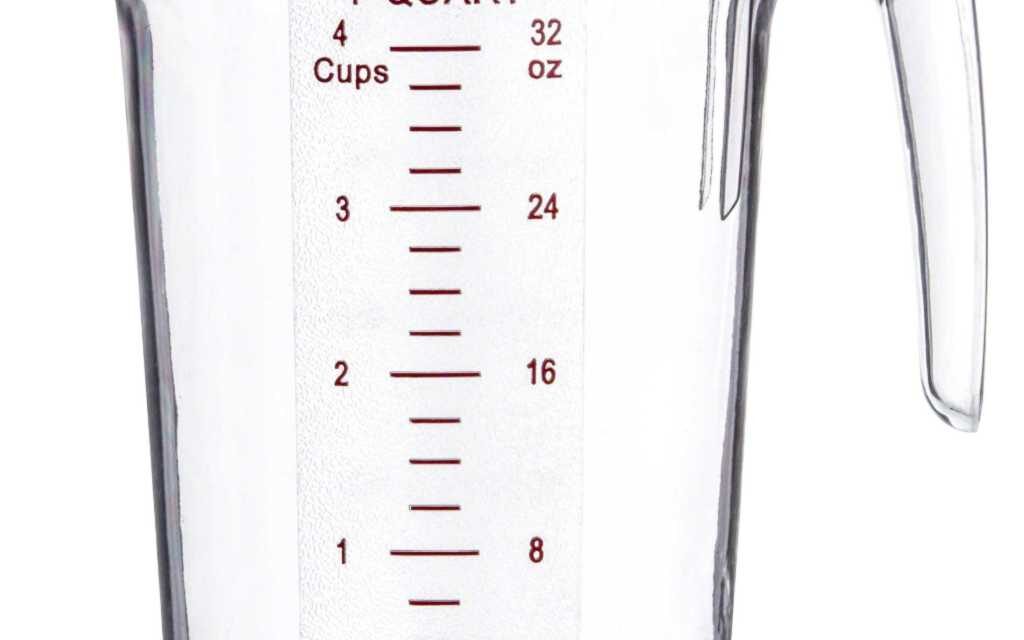
Liquid measuring cups are most commonly available in one, two, and four-cup sizes. They are almost always made of a transparent material, such as clear plastic or glass.
So that the cook can see the liquid level rise as they pour. Most also have spouts. Which distinguishes them from dry measuring cups.
Most cooks should own a one-cup and a two-cup liquid measuring cup. Having them in a microwave-safe material is always a plus.
A new liquid measuring cup on the market has an oval ring inside. Angled against the side of the cup. This allows a cook to see the liquid level from the top of the cup. Without having to bend down and look at the liquid at eye level. On a counter for precise measurement.
Note
Another innovation in measuring cups is one that can be used for both liquid and dry measurements. It is marked for each use on opposite sides. These often have a plunger so that the cook does not have to scrape sticky ingredients off the sides.
The plunger does the job. Obviously, ingredients like water, milk, and broth are measured in liquid cups. But the same goes for syrup, honey.
And generally anything that can be poured from one container to another. Common sense says that flour and sugar are measured with dry cups. Just like mayonnaise, sour cream, cheese, cream cheese, nuts, and vegetables.
Measuring Cups for Dry Ingredients vs. Measuring Cups for Liquids
Is there a difference between dry measuring cups and liquid measuring cups? Absolutely! They are different tools for different jobs.
Can you get by with just one type of measuring cup? In a pinch—for some items. Like a standard chocolate chip cookie. You certainly can and still get a great result.
For more delicate baked goods, proper measurement can be very important, and the results can be unforgiving if you get it wrong!
- Measuring Cup for Dry Ingredients
Measuring cups for dry ingredients are designed to be filled to the brim with a dry ingredient (like flour) and then leveled off. Of course, you can measure a cup of milk in a dry measuring cup.
But filling it to the top and transferring the liquid to your mixing bowl is, to say the least, inconvenient. And you will likely spill some along the way. That’s when liquid measuring cups come in handy.
- Measuring Cup for Liquids
Measuring cups for liquids are generally made with a spout and graduated markings (with volume indicators). For easy and clear liquid measurement.
The volume markings on liquid measuring cups always fall well below the spout. Making it easier to transfer liquids from one cup to another.
This also means that measuring a dry ingredient, such as flour, is not easy in a liquid measuring cup. Because you cannot level the contents.
So, use dry measuring cups for dry ingredients (flour, sugar, etc.) and liquid measuring cups for liquid ingredients (milk, water, oil).
How to Use a Measuring Cup?
Many recipes require measuring cups. So that you can include precise amounts of various ingredients. They are easy and quick to use.
Once you understand the basic techniques. Purchase measuring cups from a kitchen store or supermarket. Once you are familiar with different measurements.
Using them will allow you to measure your ingredients quickly and accurately. You can use them to measure both weight and liquids. Here is how to measure some kitchen ingredients with a measuring cup.
- Flour
Mix the flour in the container or storage bag. Using a large spoon, lightly scoop the flour from the container into the measuring cup. Do not shake the cup or pack the flour.
You can flatten the surface with an object or even your hand. Do not use the measuring cup to scoop the flour from the container. You may end up with 150% of the correct measurement if you do this! A properly measured cup of flour should weigh about 120 to 125 grams.
- Baking Powder and Baking Soda
Stir the container. Using the measuring spoon, lightly scoop from the container. Use a knife to level it evenly with the top edge of the measuring spoon.
- Sugar
Sugar is measured by scooping the measuring cup into the container or bag until it overflows. Then leveling it with a container.
- Powdered Sugar
Powdered sugar should generally be sifted to remove small lumps. It is measured by pouring the sugar into the measuring cup, then leveling it with your hand or a container.
- Liquid Ingredients
Liquids should be measured at eye level. Pour the liquid into the measuring cup, then bend down so that you are at the same level as the measurement markings. The liquid should be exactly at the mark—not above or below.
- Semi-Liquid Ingredients
Ingredients like sour cream, peanut butter, and yogurt are measured using a measuring cup because they are too thick to be accurately measured in liquid cups. Level the sour cream and peanut butter with a container.
- Solid Fats
Butter and margarine have measurement amounts marked on the sides of the paper packaging. Solid vegetable fat is measured by placing it in a cup so that there is no air space, then leveling it with a container.
To easily remove fats from baking molds, spray them with a non-stick cooking spray before measuring.
- Chopped Ingredients
Be very careful to know whether an ingredient should be chopped, diced, or minced, and whether it is measured before or after chopping. Then, place the food in the measuring cup so that the top is level with the surface.
When making cookies, cakes, bread, pie crusts, and candies, precise measurement is essential for the recipe’s success. When cooking casseroles, soups, stir-fries, and meat dishes, you can vary the quantities more, and the result will still be good.
By following these rules and tips, you can be sure that any recipe you tackle will be a success.
Which Material Is Best for a Measuring Cup?
- Stainless Steel
Stainless steel is the most durable material for dry ingredient measuring cups. They withstand frequent washing well and almost never break or bend.
- Glass
When it comes to liquid measuring cups, the best material to choose is glass. This material does not absorb ingredient odors and can be easily cleaned. However, glass measuring cups are fragile and can crack when exposed to boiling liquids.
- Plastic
Plastic measuring cups for both dry and liquid ingredients are budget-friendly. The downside is that plastic is porous and can easily absorb flavors and stains. Plastic measuring cups can also melt when holding hot liquids.
- Silicone
Silicone measuring cups are more durable than plastic and can withstand heat.
What Important Features Should You Look for in Measuring Cups?
Although measuring cups may seem insignificant to some, they are a necessity for cooks and bakers. The majority of recipes require you to measure ingredients in measuring cups to achieve the perfect ingredient balance for your dishes.
You will need proper measuring instruments. For this reason, owning quality measuring cups is essential.
Measuring cups come in a wide range of sizes, materials, and designs. How do you choose the right one among all the available options?
We will help with useful tips on how to choose the best one based on your needs and the most important factors.
- For More Convenience
Opt for heat-resistant measuring cups. Silicone and stainless steel are the materials of choice when it comes to hot ingredients.
- Choose Practical Handles
Bent handles offer more security when lifting and stack better compared to loop handles. Grippy silicone handles provide a better grip.
Shorter handles do not bend easily and offer better control compared to long handles. The markings on your liquid measuring cup will not wear off if they are enameled.
An angled liquid measuring cup has rings inside that allow you to track the ingredient measurement without having to bend over.
The Importance of Maintaining Measuring Tools
Why Is Proper Care of Measuring Tools So Important?
Here are some additional benefits:
- Increase Accuracy
If measuring tools do not receive proper care and maintenance, they are more likely to take inaccurate readings. Some of these tools take precise measurements, so even small changes can impact accuracy.
Damaged instruments can also be significantly off. If you do not realize that your measurements are incorrect, these inaccuracies could affect the success of a task.
A variety of factors can impact the accuracy of a measuring tool, ranging from inadequate storage temperature to excessive vibrations to physical damage from dropping.
Since damage or improper maintenance can affect accuracy, it is essential to ensure they are properly maintained. Measuring tools also naturally fall out of calibration over time. Regular gauge calibration is therefore essential.
- Extend the lifespan
Properly maintaining precision tools, such as your measuring cups, is beneficial for extending their lifespan. With proper care, many measuring instruments can serve you well for a long time. However, if they are not maintained, they will break sooner, and you will have to replace them earlier.
Improper maintenance increases the risk of a tool failing in the middle of a task or gradually becoming less effective, reducing the efficiency and accuracy of your work.
- Cost reduction
Following proper maintenance procedures can help you reduce costs in the long run. It can help you avoid costly breakdowns, major repairs, and downtime. This also means you will need to replace your tools less frequently, allowing you to get more value from your investment in quality instruments.
Tips for maintaining measuring cups
Each measuring cup has different maintenance needs, and you should receive instructions in the user manual for each measuring cup you purchase.
It is essential to follow these recommendations to keep your tools in optimal condition. In the following sections, we will go over some general recommendations for maintaining measuring cups, as well as some more specific examples.
- Storage space
Storage is an essential aspect of measuring cup maintenance because these tools often spend a lot of time in cabinets, making them prone to breaking.
Be sure to follow the storage recommendations for each measuring cup you use. Different types of measuring instruments and tools made from different materials often have varying storage requirements.
Many measuring tools come with cases, and it is often recommended to store your tools in these cases. If your measuring cup does not come with a case, purchase one that meets the storage requirements of your instrument.
Ensure it is made of the right material, is the correct size and shape, and has the necessary features. Often, these cases will have padding. For some types of measuring cups, you can place them on a clean, dry cloth inside a case. Storing your tools in a case protects them from airborne contaminants and accidental physical damage.
- Storage temperature
You should also ensure that you store your measuring instruments at the proper temperature and humidity levels and that other conditions are suitable for your tools.
Generally, you want to keep measuring cups in a cool, dry place. However, some devices may also come with more specific recommendations.
Make sure to maintain the storage area at an appropriate temperature and keep your devices away from heat sources and direct sunlight.
If your measuring cups are exposed to sunlight or other sources of excessive heat, they may expand as they heat up and then contract as they cool down. This can damage them and reduce their accuracy.
- Cleaning
Another crucial aspect of measuring cup maintenance is keeping them clean. Different cleaning recommendations apply to different types of measuring cups and materials.
Make sure to clean them carefully to ensure thorough cleaning and to avoid damage. Proper cleaning of your tools is essential because any residue left on your device can impact measurement accuracy. The material your measuring cup is made of plays a significant role in the cleaning method you should use.
Here are some general cleaning tips:
- Do not leave your tools in contact with dirt or oil for extended periods, as oils can cause corrosion.
- Avoid touching measuring cups with your bare hands, as skin oils can be harmful.
- Use a soft, non-abrasive cloth to clean your measuring cups, and ensure the cloth is clean before using it.
- Handling
Another critical aspect of maintaining your measuring cups is handling them properly during use. Taking care to avoid accidental damage and using your measuring cups correctly can help extend their lifespan and ensure accurate readings.
When using a measuring tool, it is not protected by its case or storage space, so it is particularly crucial to handle it carefully.
Be sure to avoid sudden shocks or rough treatment, such as dropping, throwing, or knocking the device against hard surfaces. Placing rubber mats in workspaces can help protect measuring cups from damage in case of accidental drops.
- Maintenance
You will also need to periodically perform preventive maintenance on your measuring cups.