












Funnel and food filter: How to make the best choice?
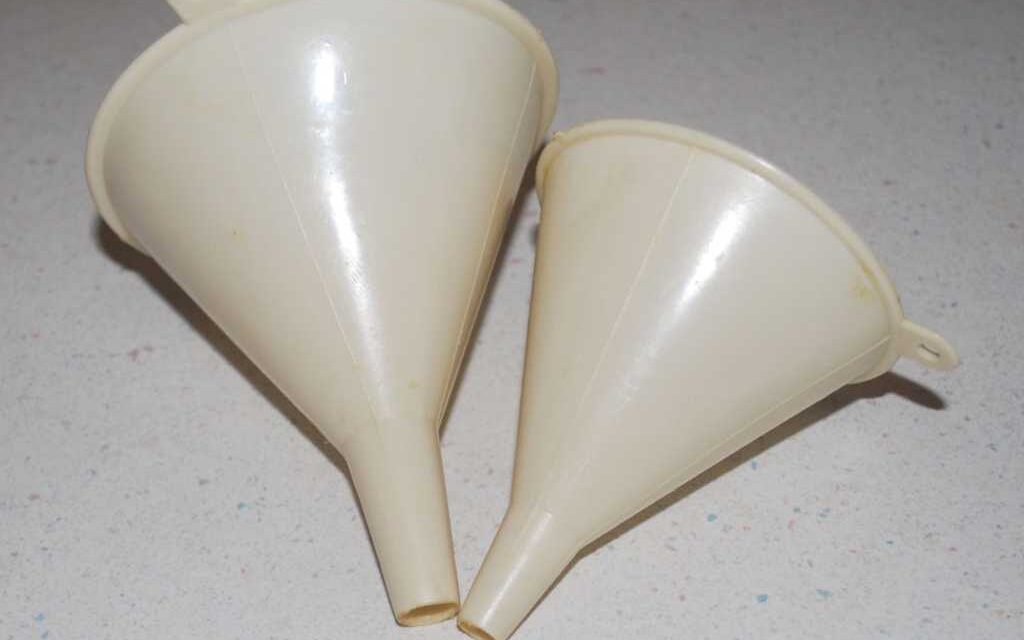
The Funnel
Made of sufficiently rigid material to prevent collapsing under the influence of what is being poured. The funnel, shaped like a cone, ends in a tube. This tube is generally made of metal, plastic, or glass.
It is also possible to find it in waxed paper if it is intended for single use. Used in mechanics and the industrial field, the funnel is also one of the various kitchen utensils.
Why You Need a Canning Funnel
The tool that makes decanting fun—and frankly, possible—is a humble funnel. It directs all the small things prone to scattering straight to their final destination. It’s a traffic controller. It saves so much time that its presence in the kitchen is indispensable.
- The funnel gives a helping hand
A canning funnel makes it easier to reuse canning jars as storage jars, even if they have a narrow opening. Well, that seems a bit obvious. But it’s not just about canning or pickling jars.
A canning funnel allows you to pour easily and without mess, transferring dry beans from their fragile plastic packaging into long-term storage jars. And it prevents sugar from spilling everywhere.
- Use a canning funnel for portioning
This is where a canning funnel can shine. Use a canning funnel to fill peppers or stuffed tomatoes without dropping the filling everywhere.
Bring your canning funnel with you when making muffins or cupcakes to neatly fill a muffin tray. It works perfectly when you don’t have a spoon to fill the molds.
- Use a canning funnel for pouring hot foods
Once the weather gets cooler, many people put away their canning supplies. Not me—my canning funnel is used even more during soup season.
Not only do I use it weekly to fill my kids’ thermoses, but I also use it to transfer hot, splash-prone soups into storage containers.
- Use it to pour ingredients into tight spaces
Although this canning funnel trick is less frequently used in my kitchen, a canning funnel can be incredibly useful for introducing ingredients into food processors (without removing the lid) or into your stand mixer.
While making buttercream or marshmallows, I wedge my aluminum canning funnel between the head of my stand mixer and the edge of the mixing bowl.
This allows me to slowly stream in hot sugar syrup while the mixer is running. The wide opening lets food pass quickly and directly to its destination.
Types of Kitchen Funnels
Each of the different materials a kitchen funnel can be made from has its own advantages and disadvantages. Let’s take a closer look at the three most commonly used materials for kitchen funnels:
- Stainless Steel
Metal, most often stainless steel, is the sturdiest and most durable option available, as well as the most expensive. They are perfect for use in commercial kitchens but may be excessive for home kitchens, where they see less frequent use.
- Plastic
Plastic is the cheapest material but also the least durable. Plastic funnels are good for temporary use but will fail in the long run. Choose them if you absolutely need the cheapest funnel or if you don’t plan to use a funnel frequently in your kitchen.
- Silicone
Silicone is our favorite material for funnels due to its fantastic combination of durability, flexibility, and easy storage. It is naturally antibacterial and not too expensive, making it a smart and versatile option ideal for both residential and commercial kitchens.
Features to Consider When Buying a Kitchen Funnel
If you take the time to study and learn about everything you can expect from a kitchen funnel, it should be a purchase you only have to make once. Read the following sections, and you’ll know exactly what to look for to find the perfect funnel for your kitchen.
- What to Look for in a Kitchen Funnel
Durability, regardless of the material it’s made from. Funnels are not often used in tough kitchen situations, so a single well-built funnel should last a lifetime.
Easy to store, whether by being collapsible or having a way to hang it when not in use. If buying a set of funnels, always look for a storage key ring to help keep them organized.
Properly sized, depending on what you plan to use your funnels for. We strongly recommend choosing a set of funnels, as it will give you options suited to different container sizes.
Easy to use, preferably with handles or non-slip grips. Also, look for stems with indentations to allow air to escape, ensuring smooth and even pouring.
Given the wide variety of kitchen funnels available on the market today, finding a high-quality one is harder than necessary. To make it easier, look for a funnel by considering these different criteria:
- Design
- Material and Size
Kitchen funnels come in a variety of designs, and the best one for you will depend on your needs. You’ll need to choose the material and size that suit your preferences.
For example, do you want a long stem that fits into bottles for transferring liquids, or a short, wide stem for moving grains into a jar?
The design will also impact how you store the funnels—some are collapsible, while others have hooks or can be nested together.
If you plan to use funnels for hot ingredients, a side handle that makes it easy to hold over a pot or pan is essential.
- The Inclusion of a Strainer
Another feature to consider in the design of this kitchen tool is the inclusion of a strainer. This is most common with stainless steel funnels, although you can also find them in silicone and plastic versions.
A removable strainer can be placed inside a funnel and used when you want to separate liquid ingredients from solids. This filter makes your funnel set a multifunctional kitchen tool.
- Neck or Stem Shapes
Kitchen funnels are also made with different neck or stem shapes. You will find that some are specially designed to minimize interference caused by air bubbles.
During the process of transferring a liquid, a heart-shaped neck is designed to prevent bubble buildup in oils and sauces as you pour them.
- Diameter
The diameters of kitchen funnels vary greatly. The diameter measurement in product descriptions refers to the widest point (the top) of the funnel. But it is also important to consider the opening diameter of the spout. If you tend to transfer large quantities, a large funnel diameter will speed up the process for you.
However, if the spout opening (where it connects to the base of the funnel) is very narrow, food products can get stuck and flow slowly. The ideal spout diameter should be between 1.2 cm and 2.4 cm.
Narrower, and you need to use force to push ingredients through. Wider, and they may not fit into your jars or containers.
- Ease of Cleaning
Most kitchen funnels are now dishwasher safe, which should make cleaning quick and easy. However, funnels with stems, ridges, or very thin rims will still be difficult to clean even in the machine.
If you plan to use your funnel for powders such as ground spices, you should choose a smooth model without ridges for easier cleaning. And if you want a fine-necked funnel, the best products will come with a cleaning brush so you can remove any debris.
- Material
Most kitchen funnels are typically made from plastic, stainless steel, or silicone, and each material has its own unique properties.
- Plastic Material
Plastic tends to be the least expensive option and is very lightweight, making it ideal for resting on top of bottles when you need to transfer liquid.
If you choose a plastic funnel, you should ensure it is made of hard plastic and ideally heat-resistant to provide more flexibility.
- Stainless Steel Material
Stainless steel is the most durable option, and these funnels retain their shape regardless of the ingredients you pour into them. Since they can be heavier than plastic models, you should choose a stainless steel funnel with a side handle to help hold it securely while in use.
- Silicone Material
Silicone is a great option if you want to brighten up your kitchen with vibrant colors. Likewise, if you lack space in your kitchen, silicone funnels can collapse to be nearly flat, saving space in your drawers.
These work best for transferring dry food rather than liquid, as their spouts tend to be somewhat wide and short, making them less suitable for narrow bottles.
- Size
As with diameter, you need to consider the size of the funnel, the mouth, and the stem. Narrow, long stems work best for transferring liquid or oil into a bottle, as well as spices. Short, wide stems work better for moving ingredients such as rice or grains into jars.
If you want to decant small amounts of food products, a funnel with a mouth diameter of 6 or 9 cm will be sufficient. If you want to move larger quantities, you can find funnels measuring around 15 cm.
What is a Chinois Strainer?
A fine-mesh strainer, typically conical and sometimes spherical, the chinois strainer is one of the increasingly popular kitchen utensils used in cooking. It is used to strain liquids such as sauces, tea, and more.
Benefits of Using a Chinois Strainer
If you’re wondering why you should get a stainless steel chinois strainer, here are some interesting benefits you’ll enjoy:
- Pure and Clean Filtering
Have you ever had soup full of solid fragments and wished for a smoother finish? A chinois strainer is designed to give you the soft and silky texture you need. It removes all solids such as bone fragments, seeds, fat droplets, and other impurities, allowing you to enjoy soup, milk, juice, cocktails, and other beverages.
- Safety
A high-quality stainless steel strainer is food-grade and safe for food and beverages. Beyond that, it helps filter out impurities and unwanted solid parts so you can enjoy safer food and drinks.
- Durability
Unlike materials such as plastic or lower-quality metals, stainless steel is a high-quality metal that effectively resists degradation. It is rust-resistant and can therefore be used for food preparation. A good stainless steel chinois strainer is a kitchen tool you can expect to use for a lifetime.
- Versatility
Did you think chinois strainers were only for filtering tea leaves from tea? Oh no! Besides brewed tea, there is a whole world of things you can use it for. You can sift flour, sugar, or even salt, purée fruit juice and remove seeds and solid fragments, make finer porridge for toddlers, filter milk kefir, and more.
The Chinois Strainer and Its Use
Also known as a porcelain hat, a chinois is used to strain broths, sauces, soups, and other items that need to have a very smooth consistency. If you are making raspberry puree, for example, you will need a strainer to remove the seeds. The same applies to seeds in jams or bone fragments in stocks.
While home cooks typically use a standard strainer, chinois sieves are the preferred tool for professional chefs. Why? These traditional French kitchen utensils are more effective at removing seeds and other solid bits from food, resulting in a smooth finish.
- How Are Chinois Sieves Used?
A chinois is sometimes used with a wooden pestle that is pressed into the food, working it through the chinois mesh. The object is similar to a porcelain hat, which has the same conical shape as a chinois but is made of perforated metal instead of mesh.
The terms chinois and porcelain hat are sometimes used interchangeably, but they are technically two different tools. Like the chinois, the porcelain hat is also sometimes used with a wooden pestle to push food through.
- How Much Does a Chinois Strainer Cost?
Generally, chinois sieves range in price from the upper teens to around 40 euros. On average, expect to spend at least 30 euros on this kitchen tool. The fact that chinois strainers are relatively affordable means that if you are a home cook, you can probably afford to spend a little extra to see if it’s worth it for you.
Traditional strainers can cost as little as 4 euros and up to about 10 euros, meaning a chinois is three to four times the price. However, if you’re preparing a special dish and can afford to splurge, there’s no real reason not to opt for the pricier sieve. A sieve is not just about having a fancy tool in your kitchen—it can also make the task of removing seeds, fragments, and other solids from fruits, stocks, and other foods much less labor-intensive.
If you rarely make stock or similar preparations from scratch, a chinois sieve may not be worth the investment. Before purchasing one, consider how often you are likely to use it.
Strainer vs. Chinois: What’s the Difference?
A strainer is usually fine-meshed and bowl-shaped, ideal for rinsing a pint of berries or draining pasta. A strainer is typically large, and you can find them with holes of varying diameters.
We often think of colorful plastic or metal sieves that rest on their own base rather than needing to be held by a handle. There are small-mesh versions used to catch seeds when squeezing lemons.
Then there is the footed bowl strainer, which can handle large amounts of pasta. And finally, there is the chinois. These can be expensive, and the best ones come with a wooden pestle to press ingredients against the sides. They have a conical shape.
This shape allows for a greater surface area of tension, and they are primarily used for making sauces, soups, and creams that need to be super smooth and silky. They have extremely fine holes, and you can use the pestle to extract every last drop of liquid from solid ingredients without crushing the grains.
Why You Should Skip a Strainer and Buy a Chinois
In terms of efficiency, professional chefs generally have little time for single-use tools that take up valuable space without justifying their cost.
Think garlic presses, avocado slicers, and cherry pitters. You can use a chinois for everything you would use a strainer for—and much more. A chinois is a cone-shaped sieve made with fine metal mesh.
It is traditionally used to strain things that need to be very smooth, such as broths, sauces, and soups. It usually has a metal or plastic handle and a small lip on the opposite side.
This allows it to rest securely over a large pot or sink. Most home cooks use a strainer for tasks like draining pasta and washing vegetables. A chinois can accomplish these tasks and more.
Because they are made from fine-mesh metal, you can pass a soup or sauce through it to achieve a very fine texture, strain homemade nut milks, sift flour and other dry ingredients for baking, or create a super-smooth ice cream base. They are dishwasher-safe, easy to store on hooks, and last forever. Strainers simply aren’t as versatile. Why settle for one when you could have something that does so much more?
Key Criteria for Buying a Chinois Strainer
Chinois strainers tend to be more expensive than other types of strainers due to their fine mesh and delicate design. However, they should be considered a must-have for any serious professional or home chef.
With a fine-mesh chinois, you can easily enjoy soups, creams, sauces, and more without lumps. When purchasing a chinois for your kitchen, consider the following features:
- Hooks for Stability
Like a food mill, the best chinois strainers for fine foods have hooks that allow users to easily grip the bowl or glass they are using, keeping the kitchen tool stable.
- The Heat-Insulating Handle
A comfortable and heat-insulating handle is important if you plan to use the chinois for hot liquids or foods, such as in the preparation of fine teas or soups.
When choosing a chinois with a handle, be sure to check that the body and handle are made from a single composite material. This will ensure a more robust and durable handle.
- The Stainless Steel Mesh
Chinois strainers, like other sieves, can be made from a variety of mesh materials, but we recommend stainless steel for the best results.
What Is a Food Filter?
Designed to retain elements larger in diameter than its pores, a food filter consists of a membrane perforated with pores of uniform size, allowing only useful elements to pass through. The use of a food filter is crucial during cooking.
Are There Different Types of Food Filters?
Considering the material used in their manufacture, there are several types of food filters. This variation also depends on their purpose and structure.
To ensure effective filtering, you need a food filter that meets your needs. The different types include:
- The Stainless Steel Food Filter
This type is ideal for draining water from various foods such as rice, pasta, vegetables, tea, and more. Thanks to its rust-resistant material, it is dishwasher-safe for easy cleaning. You can find various sizes of stainless steel food filters on the market.
- The Cotton Food Filter
Made of food-grade cotton fabric, the cotton food filter is a 100% recyclable product. It can be used for filtering tea and other types of food. This type of filter is hand-washable, but it can also be placed in the dishwasher.
- The Silicone Food Filter
A kitchen utensil designed for draining, the silicone food filter has a lateral shape. For use, it can be clipped onto a bowl to allow water to pass through easily. It is durable and has a long lifespan. Various sizes are available on the market.
- The Nylon Food Filter
Used for filtering liquid foods, the nylon food filter is a food-grade bag. Made of nylon, it is durable and resistant, making it ideal for filtering liquids. Different sizes are available on the market.
How to Choose a Food Filter?
Food filters are essential tools for cooking, assisting in the filtering of both liquids and solid foods. When purchasing a food filter, consider the following points:
- Size
Size is a crucial factor. Food filters come in various sizes. Small food filters are used for filtering tea, fresh fruit juices, and similar items.
Due to their small size, they may be difficult to handle. Larger food filters are more suitable for rinsing vegetables, fruits, and other ingredients.
- Product Design
It’s unlikely that you would buy a food filter that you don’t like. Therefore, your choice should be based on your preferences. The market offers various brands with different styles of food filters, and these models vary depending on the type of material used.
- Material
Stainless steel is the most popular material on the market today due to its sleek appearance and durability. With proper maintenance, a stainless steel food filter can last a long time. Plastic food filters, on the other hand, have a much shorter lifespan.