











Buying guide: which immersion blender or kitchen giraffe should you choose?
What is an Immersion Blender or Kitchen Giraffe?
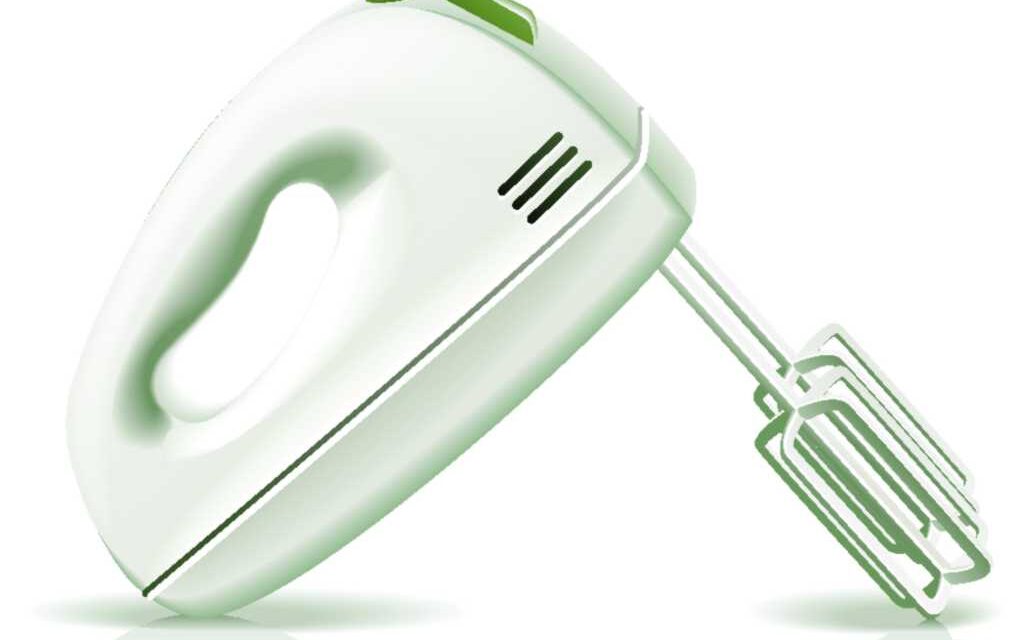
Simply put, an immersion blender is an easy-to-use kitchen gadget for pureeing soups, making individual drinks, or mixing small amounts of food. These are used.
When you don’t want to use large electric blenders. Or when you only need to make something for one person. An immersion blender is not ideal for breaking down large chunks.
But it works well for quick electric blending. Pureeing soft fruits or vegetables, yogurt, protein powders, and nut butters. Throw your ingredients into a wide-rimmed glass or jar.
And simply push the blender down and start mixing. The best part is that they don’t have many parts to disassemble and wash. They are perfect for busy mornings. When you are trying to rush out the door.
Features of Immersion Blenders or Kitchen Giraffes
The important features of immersion blenders are given below:
- No Pressure Build-Up
Due to how immersion blenders operate, they have less pressure build-up. And they generally work much better with hot liquids than countertop blenders. This makes them much safer to use. When preparing a sauce.
- Easier to Clean
Immersion blenders are very easy to clean. Since they don’t have a jar and can be used directly in a bowl or pot. As such, you only need to clean and rinse their blades, and you’re done.
What Are the Many Benefits of Using an Immersion Blender?
So, why do you need one in your kitchen? Here’s a quick checklist of the benefits of an immersion blender:
- A versatile, low-cost tool that can be used in a wide range of situations.
- A compact design that makes it easy to use, clean, and store.
- No need to transfer food for blending when using one.
- Easy to make quick smoothies and shakes for one person directly in a glass.
How to Use an Immersion Blender or Kitchen Giraffe?
You might be more familiar with the immersion blender as a hand blender, stick blender, or even kitchen giraffe. But no matter what you call it, this versatile tool is useful in the kitchen.
An electrified wand powers a motor to spin a rotating blade or attachment. Which simplifies many common mixing, blending, and whipping tasks in the kitchen.
Once you learn how to use your immersion blender, there are many recipes you can use it for.
- Using Your Immersion Blender or Kitchen Giraffe
- Assemble the Blender
Depending on your immersion blender model, this process may vary. Many kitchen giraffes have a spring latch that clicks into place. When assembled. While others may have screw-on attachments. To assemble your blender, you should:
- Align the motor body, which will be the heaviest part of the blender, with a blending attachment. Secure these parts together firmly.
- Press the unlock button on the blender’s motor body if the attachment does not connect easily.
- Plug in the Power Cord
Choose an outlet located on the side of your workspace. The last thing you want is to cut the cord while blending and create a hazardous situation. For unmanageable or difficult cords, you may want to use a heavy object, like a bowl, to keep the cord out of the way.
- Insert Your Blender into the Mixture You Will Blend
Ensure that the immersion blender is fully submerged in the mixture you are blending. Failing to do so could cause food to splatter all over the kitchen.
- Blend Your Mixture
Press the switch on your immersion blender to activate the attachment. For many of these blenders, there is only one speed. Often labeled with the word “ON.” Be sure to keep the blades of your blender beneath the surface of your mixture.
To prevent food splashing. While blending, slowly move the blender up and down. This will help achieve a consistent and smooth texture in your mixture. For hard ingredients, like vegetables or thick mixtures such as some soups.
You may need to blend for a while. To achieve a smooth and even blend. Running your blender’s motor for too long can cause damage. So, try to limit your blending to intervals of 30 to 50 seconds.
- Unplug the Blender as Soon as You Are Done
If the blending attachment is activated while the blender is not submerged, it can be very dangerous. To avoid any accidental damage or injury, unplug your blender as soon as you finish using it.
- Using Immersion Blenders Safely
- Avoid Using Nonstick Pans and Glass Dishes
Glass can chip or break if it comes into contact with your blender’s blades. If this happens, you will need to discard your mixture. Otherwise, you might ingest glass, which can be deadly.
Nonstick coatings on pans can also flake into your mixture. This coating may be unhealthy if ingested. The safest type of mixing container to use with your immersion blender is stainless steel.
- Keep the Blender Motor Above Any Liquid While Blending
Lowering your kitchen giraffe’s motor into your mixture could burn out the motor, short-circuit electrical components, or electrocute you. Even with particularly deep dishes, avoid lowering the motor into or beneath your mixture.
- Unplug the Blender When Cleaning
Always unplug your blender before cleaning it. Never submerge your blender’s motor in water when cleaning. But you can clean it with mild soap and a sponge or damp cloth.
The blending shaft should be washed by hand in warm water. And should also be cleaned with mild soap. When cleaning the blending shaft, be very careful around the blades. They are very sharp and can cut you easily.
- Store your immersion blender in a safe place
Immersion blenders are quite simple for children to use and can be mistaken for a toy. This can be very dangerous. Therefore, you should store your blender in safe places that are difficult for children to access, such as in a high cabinet.
- Making recipes with your immersion blender
- Blend salsa
If you’re not a fan of chunky salsa, your immersion blender can create a smooth version in no time. Add tomatoes, onion, garlic, chili, cilantro, and a bit of salt and pepper into a tall and narrow stainless steel container.
Then, move your immersion blender up and down until your ingredients are blended to your preference. Depending on your taste, you’ll need to determine the quantity of each ingredient to use. For example, if you like spicier salsa.
You may want to add more chili to the mix. You can add your tomatoes last to your mixing container. This way, they will be on top and blend first.
This will release liquid that helps mix the other ingredients. Keep your blender level while operating. Even in your mixing container, tilting your blender at too great an angle can cause splattering.
- Quickly prepare pesto sauce
Add basil, garlic, pine nuts, olive oil, and a bit of salt and pepper into a tall and narrow stainless steel mixing container. Keep the blender blades level and, using an up-and-down motion.
Blend the ingredients to make your pesto. A simple pesto recipe you could use: 2 cups packed fresh basil leaves, 2 full garlic cloves, ¼ cup pine nuts, 2/3 cup extra virgin olive oil.
- Mix batter quickly and efficiently
Most handheld immersion blenders come with a whisk attachment. Which will allow you to easily mix a smooth batter. If your batter tends to get lumpy, using your immersion blender should help prevent this.
- Create small-batch smoothies
Making a smoothie in a full-sized blender can result in more smoothie than one person can drink, along with considerable mess. Add frozen fruit, yogurt, and enough juice.
Just enough to cover your ingredients in a tall and narrow stainless steel mixing container. Then, use your blender to thoroughly blend all the ingredients.
- Make homemade mayonnaise
This normally time-consuming task can be done in as little as five minutes using an immersion blender. Add 2 egg yolks, 1 teaspoon of lemon juice, ½ teaspoon of salt, and ½ teaspoon of dry mustard into a tall and narrow stainless steel mixing container.
Use your blender to combine these ingredients. Then, gradually add 1 cup of olive/canola oil to the mixture while running your blender. Wait for the added oil to fully blend before adding more oil to the mix.
As the oil gets absorbed, it will mix more easily into the blend. Once you’ve added half a cup of oil, you can pour in the remaining half in a steady stream.
If the mayonnaise turns out too thick for your taste, use your blender to mix in water 1 teaspoon at a time. Continue until you reach your desired consistency.
Which immersion blender and accessories should you buy and why?
Alright, it’s easy to see all the benefits of one of these handheld blenders. But you need to compare apples to apples when comparing stick blenders!
There are so many, and the price range is huge. So, first of all, we would say focus on what you want it to do. We advise you to consider two important points:
- What you need it for.
- How much you want to spend.
Which of these is your highest priority? Unless you’re going for the premium, top-priced blenders that do everything, then it all comes down to preference.
That’s not everything in life! Maybe it’s time to simply focus on what you need it for and not worry about its lifespan or everything it could do for you in the future!
- Your key purchasing decisions
Below, we’ve outlined the 7 main criteria to help you with your purchase. Once you go through them, we hope you’ll find a match among the most award-winning immersion blender brands or models.
- What to consider when buying an immersion blender
- Power, speed, and control
- Wattage
For light and infrequent tasks, you don’t need much power or speed. For thicker, heavier, and tougher tasks, you need more power and control. However, judging solely by wattage can be misleading.
Most sellers and mini-reviews claim that over 200W is good or that the more watts and speed settings you have, the better the blender.
This certainly seems to mean that the price increases. That’s probably why most models fall within the 400W – 800W range. And this works for most designs.
- Build quality
However, just because a blender has a higher wattage doesn’t necessarily mean it is necessary, guarantees better results, or will last longer. So, it’s not just about power!
It’s more about the type and quality of design, as well as how speed and power combine to deliver the results you need. Of course, if you don’t need it for high-volume tasks.
Or if you’re only blending soft or cooked foods anyway—such as baby food purée, creamy soup, or simple smoothies—then you’ll probably be happy with a blender under 200 watts.
- Speed
Speed is very important, and you should be able to control it. It is essential to have both a high and a low speed, or a range where you can vary the speed for different uses. You need a fast speed to blend or blitz ingredients, but a slow one for more delicate tasks, such as whisking, emulsifying sauces, and making mayonnaise.
Check if it is easy to adjust and change speeds while blending. Are the controls easily accessible with buttons or dials? Is it easy to press the buttons? Some have a soft-touch design.
- Quality and Durability
- Material: Plastic or Metal?
What material is the immersion blender made of, and is it the same for all its parts? (The blades, their protectors and shaft, the handle, and the main motor body too). What is the warranty and repair service like?
Think about how often you might use your hand blender. Will it last? We compared metal vs. plastic. Some customers report leaks—both of liquids and parts! You should consider these different factors when making a purchase.
- The Blades
People also wonder if the blades will scratch their non-stick pots and pans. We have never seen anyone have issues with scratching, and we think it depends on how you use it. So, read the manufacturer’s guide when you buy it.
The main materials are usually plastic and/or steel. You generally get what you pay for, and stainless steel or brushed chrome immersion blenders will naturally cost more.
Costs can be saved, or quality can be improved, depending on how you look at it, if the shaft (the end with the blades, which can be called the wand, arm, or leg) is made of a different material than the main “motor” part.
The motor part is usually at the top of the blender—the part where you grip with your hand. So, it goes without saying that the more plastic is used, the cheaper it should be. Keep in mind that the more plastic there is, the less durable it may be, and it will stain more easily. So, if you use a lot of turmeric, be prepared for a yellow-stained plastic blender handle! Metal blender shafts are less likely to warp under pressure than plastic ones.
This is where we have heard about bits of plastic breaking off. So, it is important to know how much you will use your immersion blender and for what purpose.
- Design
Here, we looked at ergonomics, shaft length, and blade height. Is it easy to hold, use, and clean? Do you have small or arthritic hands and need a nice slim grip?
Is it easy to turn on and off? Can you easily place your fingers or thumb on the buttons or dials?
- Colors and Aesthetics
Do you need it to look good? Do the colors have to match a kitchen theme you have—red, white, silver, black, green, or blue?
Vintage or modern and sleek design, or does it not matter? If you are influenced by what your favorite celebrities and chefs use, it’s up to you to make a choice based on your preferences.
- Noise Level
Does it overheat, is it too noisy, or will it start vibrating in your hand? It seems that the cheaper the model, the noisier it generally is. But this is not always the case, so check our review summaries for details.
- Blade Design
For small quantities like baby food, make sure you have a blender that will reach the food and not splash everywhere! Ensure you have a beaker or small pitcher that is narrow enough for it to blend properly.
Also, check that the blades are not too high to be effective with small amounts or to reach the bottom of the beaker. Some brands have unique patented blade technologies to increase speed, power, or make smoother purées.
- Power Cord
There is nothing more annoying than the power cord not reaching your pot, and an extra-long cable is a real luxury. A neat, coiled cord is also much easier to use than a long, straight one that can get in the way.
For us, no cord at all is also more attractive in a cordless blender. Just like us humans, maybe—the bigger the size, the easier it is to use! But then again, it might be easier to drop.
- Ease of Use
- Size and Weight
First of all, is it easy to control, comfortable to hold, not too heavy or bulky? Is the weight well-balanced? Is it small enough and light or heavy to hold? Does that matter to you? Make your choice accordingly!
- Finger Control
Would it bother you to have to keep a button pressed down for a long time, or would you prefer to click the power and speed controls on/off, high/low? Or would it be better to have a dial that you can turn?
- Cleaning
Secondly, is it easy to clean? Everyone seems more concerned about how to clean an immersion blender. Is it dishwasher safe? For us, we find that it is not that important.
It is so easy to run the blade end under the tap for a few seconds as soon as we turn off the blender. For stubborn food, about 20 seconds under hot soapy water does the trick. Or turn on the immersion blender for a few seconds while it is under soapy water, and that should remove everything.
A simple design is preferable so that food does not get stuck in small corners.
You should be able to simply wipe down the leg and the motor end. Some hand blenders have attached blades (meaning they do not separate from the shaft). Others have interchangeable blade ends.
If you can change them, is it easy to remove and put them back in place? If you really like using the dishwasher, just check which parts of the blender are dishwasher-safe.
Generally, some are, and some are not. Another important point is whether your immersion blender gets very hot during use. If so, let it cool down a bit before washing it.
- Functionality
- Kitchen tasks to perform
What can the immersion blender do, and how good is it? Will it blend, emulsify, whip, puree, crush, etc.? Is it suitable for thick mayonnaise, thick dips, salsa and pesto, smoothies, whipped cream, baby food, and creamy soup… and what about hard nuts and ice!?!?
Really, this is the most important part, isn’t it? The issue is that manufacturers use one term to describe their tools, and cooks and chefs may use a completely different term to describe the technique needed or the resulting food (e.g., whip, froth).
- Accessories
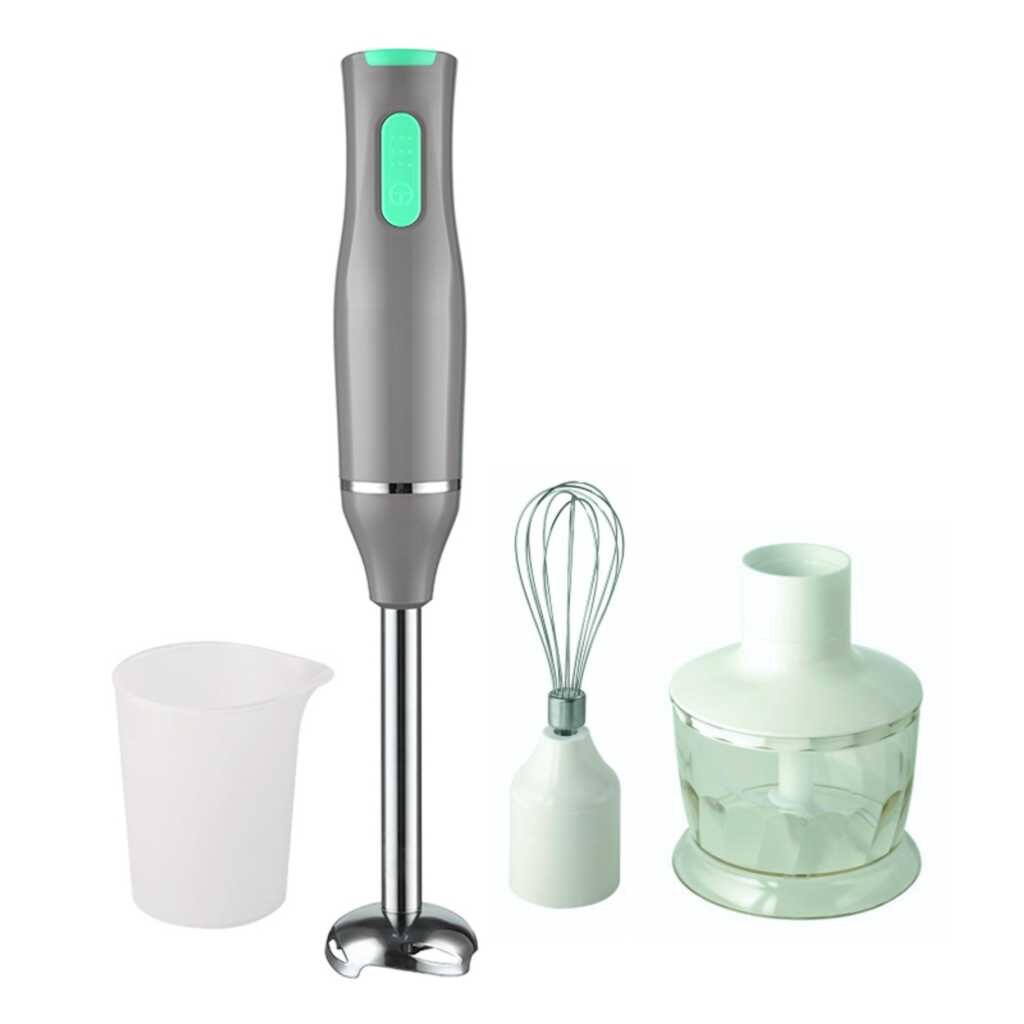
This is where accessories come into play. Most blenders come in series that include the basic blender. A simple hand blender should come with a blending blade. They may also come with a few extra blades for better chopping or whipping.
Some immersion blenders come with bowls, beakers, pitchers, or small processing units, which are additional accessories.
Some beakers come with handy spouts for pouring, as well as lids for food storage. You can get carrying bags and wall mounts for some models. Really, the more accessories you have, the closer you are to building a food processor. So think about how you will use this machine and whether a sturdier processor is what you really want on your countertop!
- Reputation
- Brand
This is where the brand, after-sales service, and customer reviews come into play. A large majority of people are loyal to brands. If that is the case for you, you can make your choice according to your preferred brand.
- How long will your immersion blender last?
The most important concerns in reviews are longevity. Will your immersion blender last? Complaints about breaking ends generally come from excessive use or misuse of plastic shafts.
The better the material, the longer it will last. The stronger the material, the heavier the work it can handle! Plastic shafts may take on the color of foods, but they can be easily cleaned with vinegar.
- Price
- Value for money
What is it worth to you, and how much can you afford to spend right now? Usually, we believe you get what you pay for. But the most important thing is to make sure that your money is spent on something that will be most useful to you.
So you really need to think about how you will use it. Otherwise, you will start accumulating a useless collection of kitchen gadgets that you don’t need.
Cleaning and maintenance of immersion blenders
A clear advantage of an immersion blender is its ease of cleaning. You can simply rinse the blender under warm water directly in the kitchen sink. Models with removable shafts can also be cleaned in the dishwasher.
Warning!!
Immersion blenders, or kitchen wands, are compact kitchen appliances that seem harmless. However, most models are quite powerful, and the blades are really sharp. If you detach the equipment for cleaning, make sure the blender is unplugged and that your hands are dry. Needless to say, like all other kitchen equipment, immersion blenders should be kept away from children.
Conclusion
We are sure that you now not only have a clear idea of what an immersion blender is but are also considering purchasing a good model for yourself if you don’t already have one. As mentioned above, an immersion blender is a very handy tool that can be used in a variety of situations and makes things easier for you in the kitchen.
It is also easy to use and clean and available in a compact design. Most importantly, it is not an expensive gadget. So why miss out?