













Meat grinder selection: Which one’s the best?
What is a meat grinder?
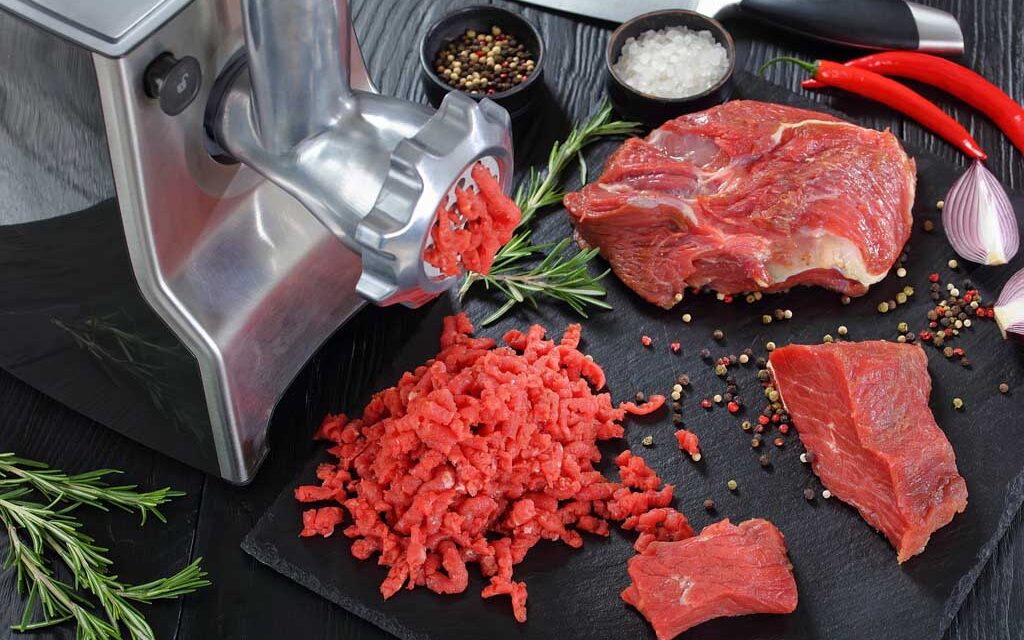
Forcing the meat through small holes at the output using a screw mechanism, the meat grinder is one of the various kitchen utensils. This device homogenizes raw or semi-raw meat and grinds it into fine pieces.
It has replaced many old tools, such as the chopping fork, which was used to create ground meat, minced beef, or any other food we commonly use. This is very useful for many people.
Because it reduces the time required to prepare and cook food, especially when preparing meat. It also shortens your cooking time, as it uses small particles of uncooked meat to grind it into fine pieces.
How does a meat grinder work?
There are two different types of meat grinders: manual and electric. Their operation generally differs in the way their blades are powered. Regarding the manual meat grinder:
The handle of the grinder is turned to properly grind the meat. Whereas for an electric meat grinder, you only need to press the button while grinding. Here is the operating principle of the meat grinder:
- Preparing the meat
Grinding meat does not require leaving it exposed to air for a long time. Therefore, it is recommended to cut the meat into small pieces while keeping it refrigerated.
Then, place the blade of the meat grinder in the freezer for about 30 minutes. It is easier to grind semi-frozen meat because it does not stick to the grinder walls or create clogs.
- Place the meat into the feed tube
After preparing the meat, it is good to disinfect the kitchen surface and ensure that the grinder is clean before adding the meat into the feed tube. Therefore, add small portions of prepared meat into the feed tube, grinding them in small batches to avoid the risk of overloading or clogging the meat grinder.
- Rotate the blade
The blades in a meat grinder are useful, especially for pushing the meat forward through the attached plates so that it comes out in the required shape. Whether you need juicy minced meat or finely ground meat,
You can obtain it quickly. Besides meat, it is also possible to add accessories to fill sausages using the meat grinder.
- Clean the meat grinder
When you are finished using the meat grinder, make sure to clean it properly to prevent meat residues from sticking to the grinder walls. Alternatively, you can use pieces of bread
And run them through the grinder, as they can absorb excess meat for easier cleaning. In the case of manual grinders,
You can conveniently clean its parts with warm, soapy water. On the other hand, cleaning electric meat grinders requires following the manufacturer’s manual instructions.
However, for proper handling and ease of use of the grinder, you should take the following precautions before and after use:
- Keep hands away from the blade
Avoid touching the blade in any way, as it is very sharp. Therefore, when storing or cleaning the grinder, be sure to handle its blade with caution.
- Keep a spatula handy
You might find yourself pushing the meat into the feed tube with your hands while grinding. Since the blades are sharp, you could injure yourself. Therefore, it is best to always use a provided spatula to push the meat through the feed tube.
- Ensure it stays dry
Store your meat grinder in a dry place to prevent rust due to moisture. Do this once you no longer need it. Additionally, you can spray vegetable oil on the grinder to prevent manual grinders from rusting.
- Keep the grinder clean
Before and after grinding meat, you must clean the meat grinder. Besides the grinder itself, ensure that the meat is clean and use a clean dish to store the final product.
- Keep it cold
When using the grinder, it is best to maintain a cold temperature for better blade operation and frozen meat processing. In addition to ensuring efficient blade function, cold meat is less likely to become contaminated by bacteria that thrive in warm environments.
Note: Operating the grinder is not too complicated, as mentioned earlier. Therefore, if you intend to grind your meat at home, avoid using pre-ground meat from supermarkets and other commercial centers. Instead, consider getting your own meat grinder.
Tips for using a meat grinder
Have you recently purchased or received a meat grinder for your kitchen but haven’t yet figured out the best way to use it? Well, you’re not alone.
You may be facing some of the common problems encountered by many meat grinder users. The question of how to use a meat grinder is one that needs answering.
If you want to make the most of your kitchen utensils and get closer to mastering the art of cooking, let’s dive into the most common issues and explore some potential solutions to help you become the next great chef.
- Why grind your own meat?
Why is it important to grind your own meat? Grinding your own meat is worth the time and effort because it allows you to have more control.
And avoid potential issues associated with pre-ground meat found in supermarkets, which may contain unwanted chemicals. Additionally, it helps save money.
- Use cold meat and equipment
If you’re wondering how to use your meat grinder, first of all, if the meat gets stuck in the grinder head and clogs your machine, it is likely due to the temperature of the meat.
And also to a high-fat content in the meat. This step is crucial and will also make the process more hygienic. Make sure to place the meat you intend to grind in the refrigerator before attempting to pass it through the machine.
Do this for about half an hour, as this should be sufficient. The grinder works best with cold meat. However, make sure not to freeze it.
The equipment should also be cold for optimal operation. The grinding plate can be used to place the meat in the refrigerator to prevent any issues during the grinding process.
It is also important to go slowly. The faster you try to grind the meat, especially if it is cut into large chunks, the greater the risk that the grinder will overheat and stop working.
- Find the right cut of meat
A often overlooked part of the process when it comes to grinding meat is choosing the right cut to start with. You need to plan ahead and decide which cut is best suited for the type of dish you are trying to prepare.
Let’s say you want to make a deliciously juicy burger. You will want less fat if you prefer it rare and a bit more (40%) if you like it medium to well done. Some of the best cuts for the best homemade burger include, but are not limited to:
- Prepare the meat in advance
To ensure everything goes smoothly and that it is easy to pass the meat through the grinder, make sure to cut it into thin strips before attempting to use the machine. A length of 3 to 5 cm is a good target to make the process easier.
Streamline the process by preparing the meat in advance, chopping it finely before placing it in the refrigerator along with the grinder parts. Keep in mind that if you are making burgers, you will want to keep the fat.
Simply discard the tough parts and cartilage. You will also benefit from adding olive oil or fat to the meat before attempting to grind it.
Because dry meat will slow down the process and may cause the grinder to malfunction. Avoid buying dried meat in general, and this will not be a problem for you later.
- Grind the meat multiple times
A common mistake when grinding meat is to pass it through the machine only once, resulting in a thick consistency that will slow down the cooking process and make the final product harder to handle.
Grind the meat at least twice, especially if you plan to make burgers, and you can ensure that the consistency will be easier to work with and provide more cooking options.
Don’t forget to place a large bowl under the grinder to catch the meat as you feed it in. You can even chill it in advance if you prefer the meat to stay cool while resting.
- Experiment with meat and seasoning
You might think it is best to season the meat after grinding so it mixes well, but that is not the case. To get the perfect flavor,
your best bet is to rub the seasonings into the meat and mix well before even passing it through the grinder. By applying the seasoning before grinding the meat,
you can ensure it is evenly distributed for a better-tasting final product. It is also worth considering different combinations of meat that you can grind for certain dishes. For example, a combination of beef and lamb can be ideal for making spaghetti Bolognese.
So, the key points to remember if you want to use a meat grinder like a chef are:
- Make sure the meat and equipment are cold before use
- Cut the meat into small pieces and season well before grinding
- Grind the meat multiple times for better results
- Find the best cut of meat for the meal you are preparing
The different types of meat grinders
There are three different types of meat grinders. They all have advantages as well as disadvantages.
- Manual meat grinders
- Electric meat grinders
- Commercial meat grinders
- Manual meat grinders
You should only use a manual grinder if you plan to grind your meat occasionally. But if you buy one, you will need to use elbow grease to make it work.
Manual grinders require human effort and labor, which can be challenging for beginners. They are not recommended for chefs and people who cannot physically push through the grinder.
Manual meat grinders require practice, strength, and effort to operate. They are ideal for places that do not have a large supply of electricity.
Most people tend to use them in isolated and remote areas, such as cabins, where a reliable power source is not always available. Moreover, they are sturdy, making them nearly unbreakable. Many buyers choose them for their reliability and durability. If you are someone with patience and the ability to grind meat using your muscles, a manual grinder is a perfect option for you.
- Electric meat grinders
Electric meat grinders have one main purpose: they are designed to grind several kilograms of meat without requiring the user to exert effort, as they would with a manual grinder.
Electric grinders will cost more than manual grinders on average, but their powerful motors help grind meat effortlessly. Additionally, electric meat grinders come with interchangeable grinding plates.
This helps users switch between different textures using a single grinder. Furthermore, this gives users multiple grinding styles that they can modify and experiment with. Look for an electric grinder if you plan to cut more than just average meat.
Parts of an electric meat grinder
Here is a list of the different parts that make up a successful electric meat grinder:
Motors: Every electric meat grinder generates its power from motors. The higher the power, the faster and more efficiently the grinder can operate. Some brands offer a motor warranty, where the user is protected if the motor wears out prematurely.
Feeding tube: The feeding tube is where the food goes to be ground. The size of the grinder is directly correlated with the diameter of the feeding tube.
Cutting blade: The cutting blade is a star-shaped metal blade that cuts the meat. Be careful when using the cutting blade.
Auger: Also known as a worm or screw. The auger grabs the meat and pushes it towards the grinding plates and cutting blade.
Meat tray: This is where you hold the strips or cubes of meat before placing them into the feeding tube and through the cutting machine.
Plunger or Metal Pusher: It is used to push the meat through the feed tube so that the auger can prepare it to be cut by the blade.
- Commercial Meat Grinders
These grinders are made for users who want to sell any type of meat. Commercial meat grinders are not recommended for home use. Chefs, butchers, and people working in related industries tend to use commercial grinders.
Although commercial grinders are a huge investment, they also bring a huge profit and reward. For professionals, precision and speed are important factors when purchasing a meat grinder. They are perfect.
Because these factors come into play in this situation. Another advantage is that commercial grinders are large, can cut large amounts of food and meat in a single motion, and have a myriad of settings.
Commercial meat grinders are expensive. However, you will be able to benefit from several advantages once you have one. For chefs trying to run a successful business, commercial grinders are the standard and most recommended option.
Manual vs. Electric Meat Grinder: Which One to Choose?
Here are the advantages and disadvantages of each type of meat grinder:
- Advantages of Manual Meat Grinders
Portability: Manual meat grinders work even when there is no power source nearby. You are not bound by the need to plug in the device for it to function properly. Essentially, you can use your manual meat grinder in virtually any situation.
No Additional Electricity Cost: Since manual grinders do not use electricity, they are economically advantageous. If you grind your food daily, you don’t have to worry about extra electricity costs on your bill.
Affordable: Manual meat grinders are cheaper than electric grinders. For beginners and budget-conscious users, they offer great utility.
- Disadvantages of Manual Meat Grinders
Health Concerns: You must be very careful when handling raw meat. You should not leave raw meat at warm temperatures for a long period.
Since grinding food with a manual grinder takes longer, you will need to freeze large batches of meat and use them one at a time.
Too Much Physical Effort: Some consumers find manual meat grinders difficult to use. Grinding meat can take a lot of time, especially if you have to process a large quantity.
No Electric Motor: With manual meat grinders, you are limited by the strength of your arms. One could say that it would be impossible to grind meat with the same degree of precision and efficiency as an electric meat grinder.
- Advantages of Electric Meat Grinders
Cleaner and Safer: Electric meat grinders do not require users to use both hands. You are less likely to risk contamination.
Because you will rarely come into contact with the meat. Since they are faster, the meat will not be exposed to warm temperatures for too long.
Easy to Use: You simply need to assemble your grinder, plug it in, and turn it on. This function is better than manual meat grinders, where you need to bolt them onto a surface.
Electric grinders are also easier to feed meat through using the meat tray. They come with a food pusher that facilitates the process of passing meat through the machine.
Extra Power: You will have the power of the motor on your side when using an electric meat grinder. Depending on the power, efficiency, and other grinder components.
You will be able to grind more kilograms per minute than with a manual grinder. You can grind hundreds of kilograms in an hour using an electric meat grinder.
- Disadvantages of Electric Meat Grinders
Expensive: Electric grinders cost more than manual meat grinders. However, you can find some at affordable prices, but high-quality meat grinders come at a higher cost.
Portability: Every model of electric meat grinder requires a power source to operate. Electric grinders are also heavier, making them more cumbersome to transport.
Note: Choosing the best grinder depends on your personal preferences and how much you plan to spend. If you only need to grind a few kilograms of meat occasionally, get a manual meat grinder.
If you grind large volumes of meat and need something to work at a fast pace, the electric grinder is the most rational choice.
The Material Used in Meat Grinder Manufacturing
Here are the most common materials used for grinders:
- Stainless Steel
If you want an electric meat grinder made of stainless steel, you will pay much more than for other models made of steel or aluminum. For users who grind a lot of meat daily, a stainless steel grinder is your best choice.
Resistant, these grinders are efficient and also robust because their internal gears are made of metal rather than plastic. Additionally, stainless steel meat grinders come with extra stainless steel accessories.
You can put them in the dishwasher for easy cleaning afterward. Keep in mind that stainless steel meat grinders weigh significantly more than their non-stainless steel counterparts.
So, if you need to move the grinder, it will be difficult. The weight difference is almost three times! We recommend using your stainless steel meat grinder in a stationary position and properly handling heavy cuts.
- Aluminum
If you plan to grind meat occasionally, aluminum is the way to go. It is lightweight and compact, which helps users working in busy kitchens.
However, you may not like aluminum due to its low durability. Consumers report that aluminum meat grinders are more prone to rust and are easier to damage.
For this reason, it should only be used for quick and short cutting batches. We recommend purchasing a stainless steel grinder for the best results.
Maintenance and Cleaning of Your Meat Grinders
Adding a meat grinder to your collection of household appliances is the best and easiest way for your family to know what they are eating. You will avoid bacteria, chemicals,
as well as additives commonly found in store-bought meats. It only takes a few minutes to grind the meat.
Maintenance is an important part of your grinder, but fortunately, it does not require much effort. You should only take a few minutes to clean and maintain your grinder.
We believe that these minutes spent cleaning your grinder will be well rewarded once you and your family start enjoying healthier meals.
- How Often Should You Wash Your Blades?
You do not need to sharpen your blades every time you finish using them. The friction from grinding meat automatically sharpens the blade. However, if you use an electric meat grinder frequently, you will need to sharpen the blade at some point. Once your blade becomes dull, you should have it professionally sharpened.
Wrap your blades in a cloth to preserve and extend their lifespan when not in use. This prevents the blade from getting nicked or dulled during storage.
- Storing Your Meat Grinder
Oil prevents oxidation and rust, which is why it is important to coat parts of your meat grinder with a thin layer of oil. Most chefs tend to use food-grade mineral oil for this purpose.
However, if you are in a hurry, you can use any type of oil. You should use a spray bottle containing mineral oil. The mineral oil coats all your parts and takes only a few minutes to apply properly.
- Storing Your Meat Grinder
After that, you will want to wipe or spray the metal parts, including the auger and the pusher of the grinder. Once done, store the parts in a plastic bag.
Additionally, you can place some rice inside the plastic bag. The rice helps prevent rust by absorbing moisture. You can also use bleach as a disinfectant, but be sure to wash off the bleach thoroughly before adding food to the appliance.