







Find the best pastry brush for your baking needs!
Kitchen and Pastry Brushes: Useful for Preparing and Decorating
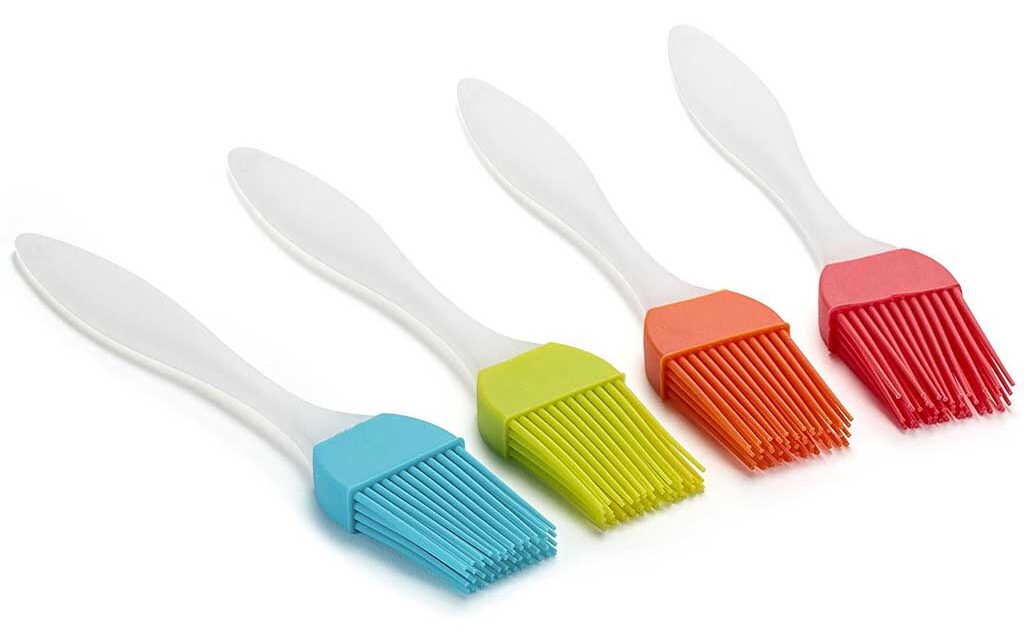
Used to grease crepe pans, molds, and others. As well as for glazing dough and coating meat with mustard and much more. The pastry brush, a kitchen utensil, is a handled tool with a flat shape and fitted with nylon bristles.
Choosing the Best Pastry Brush
Are you looking for the best basting brush or the best pastry brush to keep your meat tender and flavorful or your baked crusts golden on top? A pastry brush.
Also known as a basting brush, it is a wonderful tool with the power to transform any dish. An essential item for every kitchen.
Consider the different types available and your intended application to find a brush that allows you to unlock the full flavor of your signature recipes.
What Is a Pastry Brush?
Pastry brushes are useful for applying sauces, oils, glazes, and other liquids to dishes before and during the cooking process.
Using a pastry brush gives you better control over the ingredient you are adding. Additionally, it helps you spread an even coating for a uniform product in a clean and efficient manner.
What Is a Pastry Brush Used For?
The best breads get a golden crust from an egg wash or melted butter brushed on top before baking. Or when you need to grease a pan. Using a food brush helps you do this quickly and cleanly.
If you’ve added too much seasoning, a brush can even be dipped in water and run over your dish to remove the excess. The uses of a pastry brush in your kitchen can stack up quickly.
Basting Brush or Pastry Brush
Pastry brushes are also called basting brushes. There’s not much difference between our concept of “baking” and “roasting” since both foods use convection and heat to cook the product.
For example, a chef might prepare baked chicken and use a brush to add butter to the skin for a crispy texture. When used for meat preparation, the brush helps you apply liquid to keep your poultry, meat, and fish tender or to add extra flavor. Or during cooking, a brush can help you neatly apply a delicious barbecue aroma.
However, it is important that you only use your brush for baking or for basting meat, not both tasks. Using the same brush may accidentally transfer flavors between your pastries and meat products, resulting in cross-contact. It is best to keep a dedicated brush for each type of preparation.
Pastry Brush Shapes and Sizes
Wondering what the best pastry brushes are for your kitchen? The style of your brush can determine which tasks it is best suited for in your kitchen. Keep in mind that small brushes can be used for a variety of tasks.
Including sealing the edges of dumplings, ravioli, or turnovers. The larger the brush, the more useful it is for covering large surfaces. Like spreading sauce on pizza dough or slow-cooked ribs.
Types of Pastry Brush Bristles
- Stiff and Soft Bristles
When considering your intended use, the type of bristles on your pastry brush can make or break its usefulness. Stiff bristles are sturdy and better for tougher products, while soft bristles glide smoothly.
This makes them better for delicate foods. Tightly packed bristles on a brush hold a higher volume of liquid ingredient, while looser bristles are easier to clean.
- Bristle Color
Color can also be important. While many brushes come in white, dark-colored options are available. Some kitchens prefer to use a dark color.
So the staff can see if a bristle accidentally falls off, ensuring it doesn’t end up in the food and negatively impact the final product.
- Brush Recovery Strength
You should also consider a brush’s recovery strength. Those that bounce back quickly will retain their shape and stiffness over time, so you can get longer use.
Aside from texture, be sure to evaluate the bristle material. From synthetics to animal hair, each material type has its own advantages:
Consider the following shapes and sizes below to determine the type of pastry brush required by your process.
- Boar Bristles
- Soft texture ideal for delicate tasks.
- Water-resistant design absorbs oils.
- Holds more liquid than synthetics.
- Ideal for spreading thin liquids like oils or marinades.
- Nylon Bristles
- Strong bristles ideal for tougher jobs.
- Holds a large amount of liquid.
- Minimal risk of bristle shedding.
- Ideal for spreading thick liquids over large surfaces.
- Silicone Bristles
- Flexible bristles for easy use.
- Designed to withstand high-temperature applications.
- Easier to clean compared to natural hair.
- Ideal for spreading thick sauces over large surfaces.
- Teflon Bristles
- Delicate bristles mimic boar hair.
- Designed for high-degree use.
- Engineered to outperform alternative materials.
- Ideal for spreading thin liquids like oils or marinades.
Pastry Brush Handles
The handle of your brush can also make a huge difference. If you’re working with hot products, your staff is safer using a long-handled brush. However, if you’re performing detailed work on pastries, a short handle gives your team better control. Consider the length when choosing your brush. Additionally, the material can be just as crucial.
Usually, pastry brushes come with wooden or plastic handles. Consider your use to select the best solution for your operation:
- Wooden handles are…
- Sturdy to grip.
- Comfortable to hold.
- Elegant for front-of-house use.
- Plastic handles are…
- Easy to clean.
- Strong for tough tasks.
- Effective for long-term use.
Some pastry brushes feature stainless steel metal handles, which are durable but generally more expensive than other options.
The pastry brush and the silicone brush
If you are both a cook and a baker, consider keeping two brushes in your kitchen:
- A fine-bristled pastry brush made of natural fibers
- A sturdy silicone brush.
- The pastry brush
It is used for:
- Applying cream or egg wash on delicate doughs and pastries or butter (oil) on phyllo dough
Brushing crumbs off cake layers
What you should avoid with the pastry brush:
- High heat, which can burn the bristles and melt the glue holding them together.
- Avoid also using it with anything that has a strong odor. Smells cling to the bristles, even after washing.
- The silicone brush
It is used for:
- High-temperature applications
- Basting meat or poultry
- Applying oil or melted butter on pans
- Applying anything with a strong odor
What you should avoid with the silicone brush:
- Delicate items.
- The brush may damage fragile dough or fruits.
- Its larger bristles may also leave visible lines on baked goods.
Cleaning the silicone brush
Place in the top rack of the dishwasher. Replace if the silicone retains odors even after washing.
Types of basting brushes
The types of brushes largely depend on the material from which their bristles are made. Many modern brushes use silicone bristles, but you’ll find several different materials on the market.
The other variation is the texture of the bristles. Some may be soft and smooth, but you can find stiff and rigid ones as well. This is particularly important to know in advance because hard bristles are not suitable for delicate tasks.
Finally, brushes vary in shapes and sizes. As such, there are a number of things to watch out for when purchasing your new basting brush. To give you better insight into all the different features, we will now discuss them in depth.
- Shapes and sizes
The two shapes in which brushes are made are round or wide and flat. Each is suited to different types of activities. So if you can, choosing both won’t be a bad idea.
- Round-shaped brushes
Round brushes are best suited for tasks that require more precision, like glazing small pastries or cakes. However, if you need to glaze larger surfaces, you’ll find that using a round brush makes the task a bit longer.
- Wide and flat-shaped brushes
Wide and flat brushes, on the other hand, will cover a larger surface at once. This allows you to glaze an entire batch of pastries with ease. As such, if you don’t need to be very precise but want to bake a lot at once, you might consider getting a wide and flat brush.
- Sizes
As for sizes, you can find several on the market.
With such variety, you’re sure to find one that will meet your regular needs. However, consider choosing several to cover all your bases.
- Texture
The texture of a brush is arguably the most important thing. Using the right type of bristles can make or break your pastry or roast. It’s not as simple as right or wrong—both types will suit different tasks.
- Hard and rigid bristles
While these types of brushes don’t have as many uses as those with softer bristles, they still shine in their own way. To the point that you can call them irreplaceable for certain specific tasks.
Hard bristles can damage delicate cakes or pastries. We do not recommend using this type of brush for glazing. However, if you need to glaze a roast, you’re in luck. It will serve you perfectly!
Another specific use for this type of brush is creating frosting or glaze patterns on cookies and cakes. Because they are rigid, you can beautifully decorate your cakes.
- Soft bristles
Brushes with softer bristles have multiple uses. Using a softer material is very beneficial, as you can be sure not to damage your pastries when glazing them.
When to replace your pastry brush?
Bristle shedding, especially if you are using a brush with animal hair, is a major indicator that you need a new brush. Serving food with bristles can cause serious issues in your restaurant.
If your brush is also melted, torn, stained, or otherwise damaged, the damaged bristles will hinder your ability to apply liquids. The bristles should be evenly distributed and flat for optimal use.
Brushes that come into contact with cooking oils may become rancid over time. This happens because the oils left on the brush break down and decompose, resulting in a sour smell and taste that can transfer to food.
Tips for choosing the right pastry and basting brush
Because basting and pastry brushes are essentially the same, though used for different purposes, it is important to have a good selection of brushes that you can use for specific dishes. Here are some tips you may want to follow:
- If you work with very thick sauces like barbecue sauce, it’s better to choose silicone-bristle brushes.
- For thin liquids such as melted butter, vinegar-based marinades, or even olive oil, the best brush to choose is one with finer bristles, preferably one with natural boar bristles. You can also opt for synthetic bristles, but make sure to get a proper brush style.
- If you dislike messy cleaning of your pastry or basting brush, then you’re better off using synthetic brushes, such as those with silicone bristles. You can simply toss them into your dishwasher for cleaning.
- If you prefer a more hands-on approach to cleaning your brushes afterward, you can choose culinary brushes with natural boar bristles in a traditional brush style.
When washing these brushes, it is important to use warm water to soften the bristles while adding mild dish detergent for thorough cleaning.
Rinse very well until you can no longer smell the detergent. Squeeze out any excess water and let air dry. When drying the brush, place it in a glass so the bristles are facing upward.
- If you want a more efficient basting brush, choose one with a hollow handle. You can use the handle to “scoop up” the basting sauce, which you can then easily pour over the food you are basting. Unfortunately, this type can be a bit harder to clean.
How to maintain your pastry brush?
Cleaning and maintenance are simple and will not only extend the life of your brush but also reduce the spread of bacteria. This can help protect you from foodborne illnesses.
Brushes with plastic handles are easy to wipe and clean. However, brushes with wooden handles should be carefully hand-washed to ensure they remain clean.
Pastry brushes with animal bristles should be hand-washed, but some synthetic brushes are dishwasher safe. If you clean your brushes this way, make sure to secure them firmly in the machine to prevent damage. Remove and dry them as quickly as possible to avoid rust if your brush has metal parts.
How to hand-wash a pastry brush?
Hand-wash the brush immediately after use. If your kitchen is too busy, at least soak it in warm water until you have time to clean it properly. (This prevents liquid ingredients from hardening.)
Run the brush under hot water and gently scrub the bristles with dish detergent. Always try to remove oils as quickly as possible, as they can cause the brush to become rancid, leaving you with a dirty brush during use. Keep an eye on the base of your cooking brush, ensuring no food or grease is stuck where the bristles meet the handle.
- Rinse the brush and treat it with a disinfectant.
- Let it air dry in a clean place.