








The right spoon for every kitchen task!
A little idea about the spoon
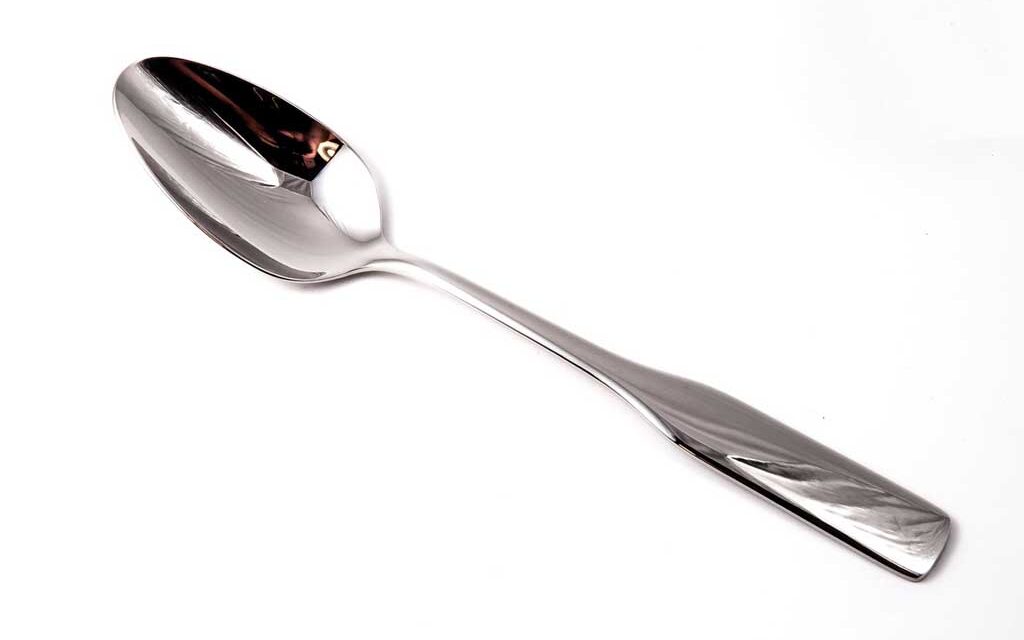
Characterized by a thinner extended handle and a concave-shaped end, the spoon, a table or kitchen utensil, is used to bring liquid or less solid foods to the mouth.
Why encourage spoon feeding?
Using a spoon is important for development. Using a spoon and bringing our hands to the center of our body (midline) and crossing the midline is an important skill.
Crossing the midline promotes communication between the left and right hemispheres of our brain. Children should start eating with a spoon around the age of 12 to 14 months.
Remember that children will be messy when they discover how to feed themselves with a spoon. It’s normal to be a messy eater when you’re a baby or a young child.
In fact, messy eating is an important sensory experience where your child can safely step out of their comfort zone. Sometimes, without these messy spoon-feeding experiences, children can become picky eaters.
In fact, children who are too clean when eating or who do not play with their food may develop sensory integration issues and oral aversions to new foods. Spoon feeding is beneficial for:
- Hand-eye coordination
- Developing a grasping pattern
- Improving posture
- Strengthening important muscle groups in the upper body
- Encouraging independence in eating and is a great sensory integration activity.
How to hold a spoon?
Although the proper use of a spoon varies from culture to culture, you can learn a universal way to hold a spoon that allows for the widest range of motion. This involves placing the spoon on your three lower fingers, then letting your wrist do most of the work.
- Properly grasping your spoon
- Use your dominant hand
Most people use their right hand to hold a spoon. However, you want to be able to control your movements carefully, so use your dominant hand.
Be mindful if you are sitting next to someone whose dominant hand is different from yours. Be conscious of your movements to avoid accidentally bumping elbows with them.
- Hold the spoon horizontally
You want to hold your spoon horizontally when moving it. This will prevent food from spilling while you eat. Keep your spoon steady using the first joint of your index finger and the tip of your middle finger, while positioning it at a horizontal angle.
- Rest the handle on your middle finger
Curl your middle, ring, and little fingers inward and rest the handle of the spoon on your middle finger. With the bowl of the spoon facing your other hand, place the handle just before the head on your index finger. Let the end of the handle rest on the curve created by your thumb.
- Hold the spoon in place with your thumb and index finger
Place your thumb and index finger on top of the spoon’s end. Press on the end so that the spoon is held between the top of your middle finger, your thumb, and your index finger. This should keep the spoon secure while you eat and drink.
- Eating with a spoon
- Rotate your wrist to dip the spoon
Holding the spoon this way allows for a greater range of motion. When you turn your wrist away from you, the spoon will tilt downward towards your food.
Then, if you turn it back towards you, the spoon will return to its original position. This is a more flexible position than holding the spoon in a fist or between just your thumb and index finger.
- Use the side of the spoon
Bring the spoon to your mouth and eat from the wide side of the spoon rather than the tip. You can use your wrist to tilt the spoon upward to help you eat.
- Sit up straight while eating
While you might be tempted to lean forward when eating soup, it is best to sit with your back at a 90-degree angle. Instead of leaning forward, bring the spoon to your mouth.
- Eat slowly and gently
Foods eaten with a spoon are often liquid-based, making it easy to create noise while eating. To avoid making loud noises, eat very slowly.
Make sure to open your mouth wide enough to allow food in without slurping. Eating slowly will also help you better appreciate the taste and texture of your food.
- Keep a firm grip
Ensure you hold your spoon securely while eating. A loose grip may cause you to drop your spoon, leading to messes and loud noises. Keep your grip firm enough so that the spoon does not wobble in your hand while eating.
- Following proper etiquette
- Use your spoon for the right foods
Spoons are used to eat liquid-based foods like soups. They are also used for softer, mushier foods like ice cream and mashed potatoes. Use a spoon for these foods, but not for solid foods, as it can be difficult to maneuver foods like meat and vegetables with a spoon.
- Place your spoon on your plate when finished
When you are finished, it is customary to place your spoon on your plate. Always place your spoon on the plate you were eating from. If you were eating soup, place the spoon on the plate under your soup bowl.
Generally, you should not put your spoon back in the bowl at the end of your meal, as this could confuse servers who might think you are still eating. However, if no plate was provided, you can place your spoon back in the bowl. You don’t want to leave food residue on the table.
- Do not use your fingers
Avoid pushing food onto your spoon with your fingers, as this is considered bad table manners. If you need to push food onto your spoon, use a table fork instead.
- Avoid pointing with your spoon
Never use your spoon to point at other guests while speaking or gesturing. Use your spoon only for eating your food. If you use your hands for gestures at the table, put your spoon down while doing so.
The different types of spoons and their uses
There are different types of spoons for serving or eating different kinds of food. Forks often accompany spoons or help independently in picking up bites. Knives are used to spread food.
- Tea or coffee spoon
A tablespoon is the most common among various types of spoons. It is larger than a teaspoon and a dessert spoon. As the name suggests, a tablespoon is an essential item at the dining table. It is also used to measure units in recipes. A teaspoon is used for stirring hot drinks like tea and coffee.
- Soup spoon
This is different from a ladle. It is used for serving soup. While the soup ladle comes in various sizes and shapes, it is recommended to consider both the bowl and the soup ladle together when purchasing.
Because the depth of the bowl plays a crucial role in a perfect match and easy serving. The serving spoon is much larger than a regular spoon used for eating. Generally, a serving spoon is used to move food from the main dish to individual plates.
- Dessert spoon
Dessert spoons play a key role for chefs and culinary skills. The dessert spoon typically has an oval-shaped bowl that is midway in length between a tablespoon and a teaspoon, primarily used for serving desserts.
- Parfait or iced tea spoon
The parfait spoon is used to stir iced tea in tall glasses for the same purpose.
- Sauce spoon
It is used for sauce and other condiments and is provided with a gravy boat. A rare but useful type of serving spoon.
- Demitasse spoon
The demitasse spoon varies in size depending on the demitasse saucer and cup.
- Dining spoon (table spoon)
It has an elongated round bowl. It is used for eating main dishes. It can scoop just the right amount of rice or stew. It is always paired with a fork (with four tines) of the same length or a dessert knife.
Tea/Coffee spoons – They are smaller than dessert spoons in length and bowl size. These spoons are used to stir tea or coffee.
- Sugar spoon
It has a round, flower-shaped bowl. It is used to take sugar from the sugar bowl in the tea set.
- Ice cream spoon
This is a small, flat-edged spoon that helps scoop the right amount of ice cream. It comes in small, medium, and large sizes, depending on the amount of ice cream served and the size of the bowl.
- Cocktail (soda) spoon
This is a drink spoon with a long handle that helps it reach the bottom of a tall glass.
- Salad spoon
It is always used with a salad fork. It helps mix and serve salads efficiently.
- Serving spoon
This is a spoon with a large round bowl designed for serving stews and rice.
There is an appropriate type of spoon for different types of food, as well as for cooking and measuring. Today, spoons come in various sizes and materials such as metal, wood, plastic, ceramic, or a combination of two or more materials.
You may notice that stainless steel is the most commonly used. You can also find other types of spoons on the market beyond those we have mentioned.
How to choose a wooden spoon?
When it comes to choosing a wooden spoon, the quality of the wood may be the most important factor. But there are other things to consider if you want the perfect spoon for all your needs. The right spoon should feel comfortable in your hand. It should stir the way you want. It should scoop gracefully, and when tasting, you should be able to sample food with ease. Before buying your next wooden spoon, consider these factors.
- Handling
A comfortable handle is essential for good cooking. Our handles have squared sides so that hands do not have to grip as tightly, ensuring easy handling.
Additionally, the squared sides provide a secure resting place for your thumb, giving you more leverage and even better control. When your wooden spoon has the right handle, it will feel as if it is custom-made for your hand.
- Head size
If the shape of the handle is important for your hand, the shape, length, width, and depth of the head are essential for how you cook. When the head of a spoon is too wide, you may feel like you’re stirring with a canoe paddle.
If it is too thin, you will have to put in too much effort to stir and scoop food in the pan or pot. The head should be wide enough to move food and sauces but not too wide to be awkward or cumbersome.
And when tasting your dish, a spoon that is too deep will make it harder to access liquid or food without putting half of it in your mouth. If it’s too thin, it won’t be big enough to scoop small pieces of food or sauces and soups.
Scraping is also something cooks do a lot—whether to collect the delicious browned bits for a sauce or simply keep all the contents together and avoid overcooking.
The right spoon head should be sufficiently angled to scrape food and reach into the corners of the pan if needed.
- Handle length
While shorter handles work well in some cooking situations, most of our spoon handles are long and sturdy. A long handle not only keeps your hands away from heat and oils.
But it also makes it much easier to stir deep pots and bowls when mixing different ingredients. Additionally, the long handle makes it easier to grab the spoon from your jar or drawer instead of searching for the smaller ones.
And even though it doesn’t have much to do with cooking, a long-handled wooden spoon looks great in your kitchen or in your hand.
- The finish
A well-made wooden spoon is easier and more comfortable to use and will look great. More importantly, it will stay beautiful for years and years. For this reason, the right finish is essential to the life of any wooden spoon.
Our wooden spoons are pre-seasoned, look gorgeous, and are smooth and comfortable. Don’t be surprised if, after months of use, they still look new. And by re-seasoning your wooden spoon from time to time, it will become a traditional part of your kitchen. One that you will carry for years, maybe even pass on to the next generation for decades of future use.
- The type of wood
Pine is the cheapest and least durable type of wood used. Pinewood spoons can also give your food a “pine” taste at first, which fades with use.
Bamboo is an eco-friendly material due to its durability, as it is a renewable resource. Bamboo spoons are affordable and also a sustainable choice.
Hardwoods like maple, beech, cherry, or olive make higher-quality spoons. Because these woods are harder than pine, they last longer and are less likely to crack.
- The handle
The grip on wooden spoons can range from non-existent soft silicone handles to high-tech ones. In the middle of this range are wooden handles with square sides (rather than round) that allow you to comfortably rest your thumb.
- The price
Cheap wooden spoons often come in sets, which may include half a dozen spoons priced between 1 and 8 euros each. For high-quality hardwood spoons, expect to pay between 14 and 40 euros for a single spoon or a set of three.
There are different types of wooden spoons, here are some of them:
- Round wooden spoon
- Flat-edged wooden spoon
- Slotted wooden spoon
- Etc.
The best wooden spoon shape
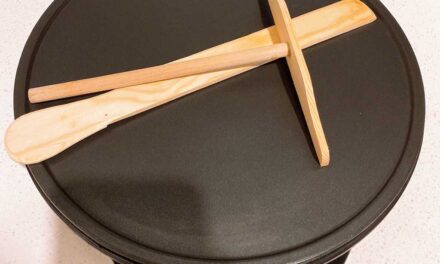
Shaped like a traditional round wooden spoon, giving you a small rounded bowl to enjoy. On the other side, it has a flat-headed extension that ends in a sharp corner. This allows you not only to effectively scrape the bottom of a pan but also to scrape right up to the very edge of the pot.
Problems with wooden spoons
- Why wooden spoons crack
The process of cutting a spoon from a piece of wood leaves rough and sometimes sharp edges at the wood grain end. Manufacturers sand them down, of course.
But every time the spoon gets wet from use or washing, the ends begin to fray. These bits will eventually catch stains and odors.
- Why wooden spoons split
Since the frayed ends also allow moisture to penetrate the wood, the spoon will eventually split and break apart. This is why putting them in the dishwasher is a big no-no. The heat helps moisture seep into the wood.
Are wooden spoons unsanitary?
If you know how to care for wooden spoons, you can use them without worry. However, letting them fray or crack allows food to seep into the wood. Over time, this leads to bacterial growth. You will notice that your spoon looks stained and may even start to smell bad.
To ensure your wooden spoons remain safe to use and in good working condition, read on for steps on how to clean and protect them.
How to take care of wooden spoons
Wood has long been used for kitchen utensils, serving tools, and preparation tools. We can say that wooden spoons are among the essential elements of the kitchen, and a beautiful addition to your kitchen and culinary experience. Practically, these utensils are lightweight yet sturdy, making them perfect for mixing salads and serving everything from mashed potatoes to green beans. Wooden spoons are also the perfect preparation tools for use with non-stick cookware.
There are several ways to maintain and clean wooden spoons. The wood material is different from metal kitchen utensils, as it expands in water.
Therefore, it is generally not advisable to soak spoons in dishwater. Apart from a few basic care rules, however, it is not difficult to keep wooden spoons looking like new. To maintain a wooden spoon:
- Clean wooden spoons immediately after use
Fill a sink or bowl with warm water. Add a few drops, about a teaspoon, of liquid dish soap to the water. Then add the spoons to the water.
- Wet a nylon scrubbing pad in soapy water
Scrub the wooden spoons until all food residue is gone.
- Rinse the spoons thoroughly with warm water
Dry them with a towel and hang them (on an utensil hook) to finish drying.
- Ensure your wooden spoons are disinfected
It is a good habit to disinfect your wooden spoons from time to time, especially if they have come into contact with a surface or food product that may harbor harmful bacteria. To disinfect, first clean the spoons with hot, soapy water. Then place the spoons on a flat surface, such as a clean baking sheet, and pour 3% hydrogen peroxide over them. Wait fifteen minutes. Rinse the spoons and hang them to dry.
- To keep them looking like new, oil your wooden spoons once a month
Rub your spoons with food-grade mineral oil or use the manufacturer’s recommended oil. The oil will extend the life of the spoon. Hang the spoons to dry after oiling, and do not use the spoons until they are completely dry.