











Whisk selection: The best one for your kitchen!
The Whisk: A Practical Kitchen Tool
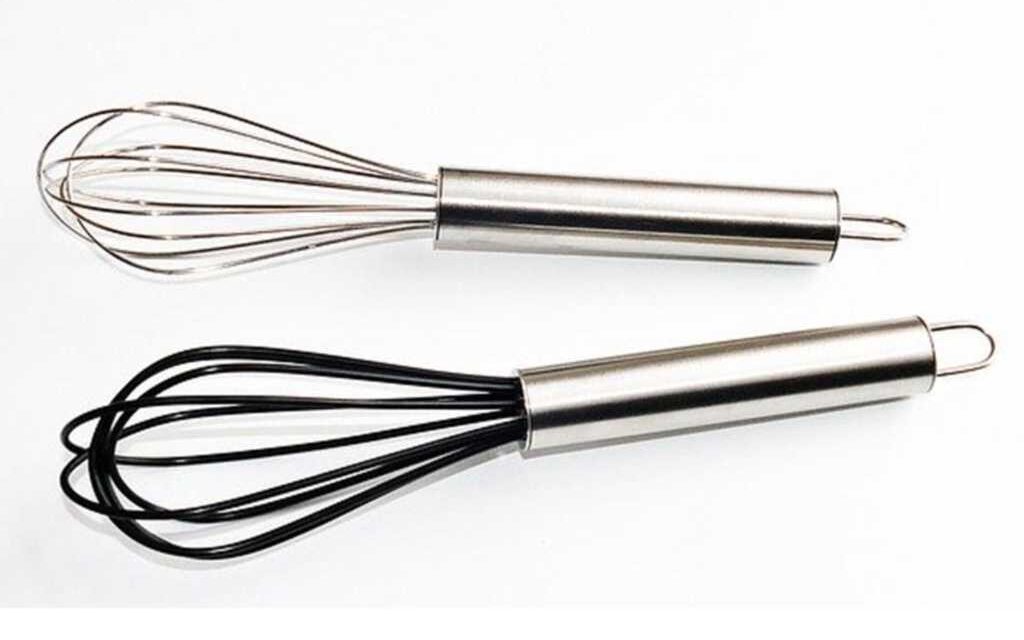
Whisks, or kitchen whisks, are kitchen utensils with a narrow handle at one end and wire loops joined together at the other. The configuration and thickness of the loops vary depending on the type of whisk you use.
The whisk is used to beat or mix ingredients together, as well as to incorporate air into the mixture. This kitchen utensil is essential for whipping cream, making mousses, beating egg whites, and preparing other foods.
Depending on the usage method, we have handheld whisks, electric whisks, and manual rotary whisks. These can be made of wood, silicone, stainless steel, or plastic.
What Does a Whisk Do?
A whisk is the right tool for whipping egg whites into foam, whipping cream into whipped cream, emulsifying hard-to-combine liquids, and smoothing a sauce—to name just a few things a whisk can do! To get the most out of a handheld whisk, here are some tips:
- Hold the handle gently between your index finger and thumb and let your wrist move slightly to the right with the whisk.
- Always start with a clean and dry bowl. You can choose between a ceramic or glass bowl.
- For Beating Egg Whites:
- Hold the bowl at an angle to gather all the liquid to one side of the bowl.
- Move the whisk quickly in small circles while slightly lifting it each time you reach the top of the circle.
- This method is the best for beating egg whites, as they will stiffen more quickly than with the following whisking method.
- For Whisking All Other Ingredients:
When working with other ingredients, such as trying to emulsify oil and vinegar to make a vinaigrette.
The best way to move the whisk is with a side-to-side motion. The force of pushing the ingredients in opposite directions against each other helps them bind better and stay together longer.
How to Use a Whisk?
Most bakers think whisking is only about getting the right circular motion. But is that really the most effective way? Science says this motion does not allow for proper aeration. Instead, whisking from side to side creates the best shearing force.
This occurs when one layer of liquid moves against another layer, creating air channels for the ingredients to fully mix. Whether you’re a beginner in baking or a regular home baker.
The proper whisking technique could be the secret power you haven’t yet tapped into. Practice these different steps, and you’ll master the technique in no time!
What You Will Need
- A metal bowl
- A balloon or French whisk
- Liquid ingredients
- Place the exact amount of liquid ingredients in the bowl according to your recipe. Grip the middle of the whisk with your dominant hand. With your opposite hand, hold the side of the bowl to keep it in place and slightly tilt the bowl toward you.
- Use your wrist to shake the whisk in a side-to-side motion. The goal is a quick drag motion to agitate the mixture or force the liquid back and forth against itself.
- Continue whisking side to side without letting the whisk head touch the bottom of the bowl.
- Stop when the mixture looks fully incorporated.
Different Types of Whisks
Whether you’re preparing treats for your bakery display or making homemade vinaigrette in your upscale café, whisks are an essential tool to keep in your commercial kitchen.
But did you know there are a number of varieties designed to help with different tasks? Below are the most common types of kitchen whisks, along with what makes them unique and when to use each type.
- What Is the Difference Between Beating and Mixing?
Mixing simply involves combining two or more ingredients, whereas beating aims both to combine the ingredients and incorporate air into the mixture.
Although mixing can be done with any utensil, such as a fork or wooden spoon, beating is best done with a whisk or electric mixers.
- Can Whisks Be Used with Non-Stick Cookware?
It is never recommended to use metal utensils on non-stick cookware. Instead, opt for whisks with a silicone coating or those made from other materials, such as wood, rubber, or plastic.
- Different Types of Whisks
Here are some of the most commonly used whisks in commercial kitchens. Each whisk has its own unique shape and configuration, designed to effectively beat and mix ingredients together.
- Piano or Balloon Whisks
Balloon or piano whisks are made with thin wires and typically have a bulbous end. These whisks are considered versatile or everyday whisks, as they are perfect for a variety of common kitchen tasks. This whisk gets its name from its resemblance to the shape of a balloon and because its wires resemble those of a piano.
Since their wires tend to be flexible and have a large rounded end, these whisks create more movement when mixing ingredients compared to other types of whisks. This added movement is especially useful for incorporating more air into the mixture when beating.
Here are some common uses for piano or balloon whisks:
- Whipped cream
- Meringue
- Eggs
- Egg whites
Lightly mixing dry ingredients as a substitute for sifting.
- French Whisks
French whisks are similar to balloon whisks but have a slimmer profile with slightly thicker wires. While these thicker wires are perfect for mixing heavier ingredients, they are still designed to be flexible enough.
To produce additional movement. Because these French whisks have a narrow end, they can fit into the corners of your pots and pans to scrape up the product and prevent food from burning on the stovetop.
The French Whisk: A Versatile Kitchen Tool
With their thick wires and slim frame, here are some common uses for French whisks:
- Sauces
- Emulsions such as vinaigrettes or mayonnaise
- Batters
- Crêpes
- Custards
- Kettle Whisks
Kettle whisks feature long handles and a large cage-like bulb at the end. These kettle whisks are used to mix ingredients in deep kettles or stockpots.
And, because these kettle whisks have long handles, they provide ease in mixing ingredients while keeping your hands away from the heat source.
Kettle whisks are ideal for use with:
- Soups
- Sauces
- Mini Bar Whisks
Mini bar whisks are specially designed for whisking egg whites in a bar setting. Egg whites are used to create light and airy cocktails. The miniature size of these bar whisks ensures they fit in any glass size.
They also store compactly behind the bar. Because these bar whisks feature the same thin wires and bulbous ends as piano whisks, they add movement to your mixture and introduce air into the egg whites for a fluffy, frothy final product.
- Conical Whisks
Conical whisks have thin wires shaped into an elongated form with a wider midsection and a narrow end. This distinct shape, which resembles a diamond, is designed to reach ingredients trapped in the corners of your pots or pans.
Additionally, with their rigid construction, these conical whisks can be used instead of spatulas or scrapers to effectively incorporate all ingredients into your mixture.
- Flat or Roux Whisks
Flat or roux whisks feature several looped wires, usually four, in a flattened balloon shape. These whisks are designed for use with shallow pans to achieve the optimal mixing angle. The lower the handle can be in relation to the pan, the flatter the whisk and the more surface area it can cover. The flat wires allow users to scrape the product in the pan and efficiently combine ingredients.
Flat or roux whisks are ideal for use with:
- Sauces
- Roux
- Shallow pan sauces
- Removing poached eggs from water
Can substitute a fish spatula when removing fish from liquid.
- Spiral Whisks
Spiral whisks consist of a single wire loop coiled into tight spirals. Because the head of this whisk is angled, it is designed to always be in contact with the bottom of your pan during the mixing process.
This allows the whisk to catch all ingredients and prevent burning. When the angled head touches the bottom of the pan, the smaller coils work to break up clumps of dry ingredients for a smoother final product.
Due to their flat and compact construction, spiral whisks are also ideal for use in small bowls where a balloon or French whisk may be too bulky.
Spiral whisks can be used for various mixing needs, including:
- Sauces
- Vinaigrettes
- Roux
- Dough Whisks
Also known as Danish dough whisks, these flat whisks feature an outer circle and an inner oval with a small loop. While they may resemble a Picasso painting, dough whisks are perfect for bakeries, restaurants, or caterers producing homemade bread and pasta. Dough whisks, as their name suggests, are ideal for handling doughs and thick batters without overworking the ingredients, unlike wooden spoons.
The thin wires are perfect for quickly cutting through dough and scraping flour pockets for a smooth, uniform mixture.
Use a dough whisk to create decadent desserts or freshly baked breads, including:
- Muffins
- Pancakes
- Waffles
- No-knead bread
- Scones
- Irish soda bread
Whether you’re making a roux to thicken crab mac and cheese or topping a wedding cake with flavored whipped cream, using the right whisk for the job is essential.
Having the perfect tool in your kitchen can save time and labor costs while producing a final product you can be proud of.
- Coil Whisks
The coil whisk, sometimes called a spring whisk, is not very common. Despite its rare appearance in the kitchen, the coil whisk has a unique purpose. While flat on the bottom, the wires coil into a small bulb.
The coil whisk is an excellent choice for breaking up ingredients that tend to clump. They come in various sizes to help you mix items in a cup or a bowl of any shape.
Coil whisks are great for making sauces, but their most useful application is when mixing something in a small cup. For example, if you have powdered hot chocolate mix in a cup with milk, this whisk will prevent the powder from clumping. You could also use a coil whisk in a Mason jar.
- Twirl Whisks
You’ll find twirl whisks in cars and cafés. These whisks add a frothy texture to beverages but are most commonly used for frothing milk for lattes.
This whisk isn’t typically used for any other purpose, so you likely only need this type of whisk if you intend to create frothy, creamy coffee drinks at home.
- Tornado Whisks
The tornado whisk looks like a piece of art with its angular, jagged wires. The bottom of the wires creates a flat surface that can be used in a sauce or sauté pan. The tornado whisk is often non-stick and made of silicone.
You can use it if you have cookware that you don’t want to damage with metal. The tornado whisk serves many of the same functions as a flat whisk. For instance, it’s a great option for making a roux or another sauce.
What to Look for When Choosing Your Perfect Whisk
If you want to shop on your own, we have included additional information to help you make the best purchasing decision. Below, you will find everything you need to select the perfect tool for your culinary needs.
- Material
When looking for a whisk, you will probably want to buy one made of stainless steel. This will prevent the product from rusting and chipping in your bowl. It will have a longer lifespan, saving you money over time.
You should avoid plastic types, as they are more likely to break within a year or two and end up in a landfill. That being said, a silicone-coated whisk is really nice to have.
If you will be whisking in a non-stick pan or a tin-lined copper pot, it will help prevent scratches. Additionally, silicone-coated varieties have much higher heat resistance than any common plastic can hope to match.
- Wires
Regarding the tool’s brand, pay close attention to the wires. You want well-constructed wires, as they determine whether your whisk will stand the test of time. You desire a sturdier whisk.
But also one that provides plenty of movement. Additionally, keep in mind that thick wires are more effective for beating eggs or meringues. They can also break up troublesome clumps of dry ingredients like flour and sugar.
- Handles
When it comes to size, the most important factor is the handle size. If the handle is too small, it may fall into the bowl. If it is too large, it may tip over. When considering the handle, it should feel comfortable.
When you hold it in your hand for a few minutes, you should be able to grip it well. So that it does not slip from your hand when whisking at high speed.
You should also ensure that the weight is proportional to the wires. Many whisks have heavy handles and light, fragile wires. This makes the tool extremely difficult to control.
- Design or Shape
Regarding shape, this is the trickiest part because there are so many different shapes and styles. You might have difficulty choosing. I will quickly define each of the most popular styles on the market:
Balloon Style: The most popular, the balloon style, works well in rounded bowls, like your average mixing bowl. Ideal for common tasks such as making batters, sauces, soups, cookies, and whipped creams.
French Variety: Similar to the balloon style but narrower and flatter. This style works well in deeper dishes and is useful for reaching tight corners.
Ball Variety: This type has tiny balls at the ends of straight prongs, used for making thick condiments like gravy or sauces. It is really useful in irregularly shaped bowls or pots, as the balls can reach hard-to-access spots.
Flat Design: This one is used for stirring in shallow sauté pans over high heat. Ideal for making a roux or a simple sauce.
As you can see, you have multiple styles to choose from. If you are looking for a high-quality all-around option, the balloon style is your best bet.
What Type of Whisk Should the Average Cook Have?
If you only cook for your family at home, you may not know what type of whisk you really need. Essentially, you only need two basic whisks: a balloon whisk and a flat whisk.
With these whisks, you can bake pastries, make sauces, roux, and gravies. You can also mix thin liquids and dry ingredients.
What Type of Handle Should Your Whisks Have?
A whisk handle can be made of metal, wood, and other materials. Metal handles can be uncomfortable if you have to hold them for long periods.
You may prefer a silicone or wooden handle. The handle should also be long enough to prevent burning your hands while whisking materials like roux in a hot pan.
Why Is a Whisk Better Than a Spoon?
Whisks do more than a spoon. They do more than just mix ingredients. Whisks also incorporate air into the ingredients using the different wires and fast hand movements.
Can Metal Whisks Damage Your Cookware?
Metal whisks can damage non-stick cookware. For this reason, you may prefer whisks with silicone, rubber, plastic, or wooden components.
If you do most of your mixing in bowls, a metal whisk will work just fine. Wire whisks are more flexible and efficient than other materials.
However, this does not mean that you will not find other good qualities in whisks made of different materials. For example, non-stick whisks are easier to clean than metal whisks.
The Easiest Way to Clean a Dirty Whisk
Whisks can be a tricky kitchen tool to clean. Trying to squeeze soapy sponges between the loops and still missing some spots.
Even though you can put your whisk in the dishwasher, it often comes out with stuck-on food residue. However, there is actually a surprisingly simple way to thoroughly clean your whisk.
- How to Clean a Dirty Whisk?
Step 1: Pour hot water into a large bowl and add about 2 tablespoons of dish soap.
Step 2: Stir the soap and water mixture with your dirty whisk until the soap is dissolved and the mixture becomes nice and foamy.
Step 3: Let your whisk soak overnight. The next day, you will find a sparkling clean whisk with no food particles attached.
Step 4: Rinse the whisk with clean water and let it dry on the counter.